
If you’ve spent any time around fitness communities, anti-aging research, or even mainstream wellness content lately, you’ve almost certainly encountered this word. It’s showing up everywhere: in sports recovery conversations, dermatology offices, biohacking forums, and mainstream health journalism. But most of the content assumes you already know what you’re looking at.
So let’s actually start from the beginning. What are peptides? They’re short chains of amino acids – the same building blocks that make up proteins. When those chains are short enough (typically fewer than 50 amino acids), they get classified as peptides rather than full proteins. And that size difference matters, because it changes how they behave in the body. Short chains are more mobile, more targeted, and in many cases able to reach places and trigger responses that larger proteins can’t.
Your body produces peptides naturally. They’re not foreign substances; they’re part of the biological communication system your cells have been using your entire life.
How Do Peptides Work Inside Your Body?
The easiest way to understand this is to think about cellular communication. Your cells don’t operate independently; they’re constantly receiving and sending signals that tell them what to do: grow, repair, release this hormone. Slow down that process. Peptides are a core part of that signaling language.
What peptides do for the body on a functional level comes down to this: they bind to specific receptors on cell surfaces, trigger a response, and move on. The analogy of a key and a lock isn’t bad; each peptide fits a specific receptor, and when it does, the cell responds accordingly. One peptide tells skin cells to ramp up collagen production, while another signals the pituitary gland to release growth hormone. And the third one tells the gut to slow digestion and send a fullness signal to the brain.
The catch is that natural peptide production declines with age. This is well documented across multiple biological systems: growth hormone secretion declines, collagen synthesis slows, and recovery takes longer. Much of what we experience as “normal aging” is at least partly a story about declining signaling efficiency. That’s the biological context that makes this entire research field interesting.
Peptides for Weight Loss and Muscle Growth: The Most Popular Uses
These are the two categories that bring most people into peptide research for the first time, so it’s worth addressing them directly.
Peptides for weight loss have become one of the most discussed topics in metabolic research, largely because of the performance of GLP-1 receptor agonists in clinical studies. These compounds work through appetite regulation and metabolic pathways rather than through stimulants – they slow gastric emptying, improve insulin sensitivity, and send satiety signals to the brain. The result is reduced hunger without the cardiovascular stress associated with traditional stimulant-based fat burners.
Peptides for muscle growth work through a different mechanism. Growth hormone secretagogues (compounds like CJC-1295 and ipamorelin) stimulate the pituitary gland to release its own stored growth hormone rather than directly introducing synthetic GH. That distinction matters because it means the body’s natural feedback systems stay active. More GH means better recovery between training sessions, faster muscle fiber repair, and improved sleep quality, during which a significant portion of physical adaptation occurs.
Neither category is a shortcut. They work best when the surrounding lifestyle supports them (such as adequate protein intake, consistent training, and quality sleep). What they can do is make the effort you’re already putting in more productive.
So, What Are Peptides for Weight Loss Exactly?
What are peptides for weight loss in practical terms? How are they different from the stimulant-heavy fat burners that have dominated the supplement space for decades?
The core difference is the mechanism. Stimulant-based products work by forcing your nervous system into a heightened state: elevated heart rate, suppressed appetite through cortisol activation, and increased caloric burn through heat generation. It works, to a degree, but the tradeoff is cardiovascular stress, anxiety, and a rebound effect when you stop.
Metabolic peptides work with existing biological pathways. GLP-1 agonists, for example, mimic a hormone your gut naturally produces after eating. They don’t override anything; they amplify a signal the body already sends. The appetite reduction feels different because it’s produced through satiety pathways rather than stress pathways. People consistently describe it as simply not being as hungry, rather than feeling artificially wired and suppressed.
Are Peptides Safe – Or Are They Bad for You?
Are peptides safe as a general category? The honest answer is: it depends significantly on which compound is used, where it is sourced, and under what conditions.
The biological basis for safety is solid; these are amino acid chains, and the body breaks them down through normal metabolic processes without putting unusual stress on the liver or kidneys. Are peptides bad for you when sourced from legitimate manufacturers with verified purity? The documented side effect profile for most compounds is relatively mild – localized injection site reactions, occasional nausea during initial use, and transient effects that tend to resolve quickly.
The much larger safety concern in this space isn’t the compounds themselves, it’s product quality. The research peptide market is largely unregulated, which means contaminated, underdosed, or mislabeled products are genuinely common. A compound that’s 70% pure isn’t the same product as one that’s 99% pure, and the difference has real consequences. At Iron Peptides, every product is independently tested via HPLC and mass spectrometry, with a third-party Certificate of Analysis available for every batch.
Peptides for Skin: The Secret Behind Smoother, Firmer Skin
Peptides for skin have become a mainstream ingredient in high-end skincare, and for once, the science actually supports the marketing.
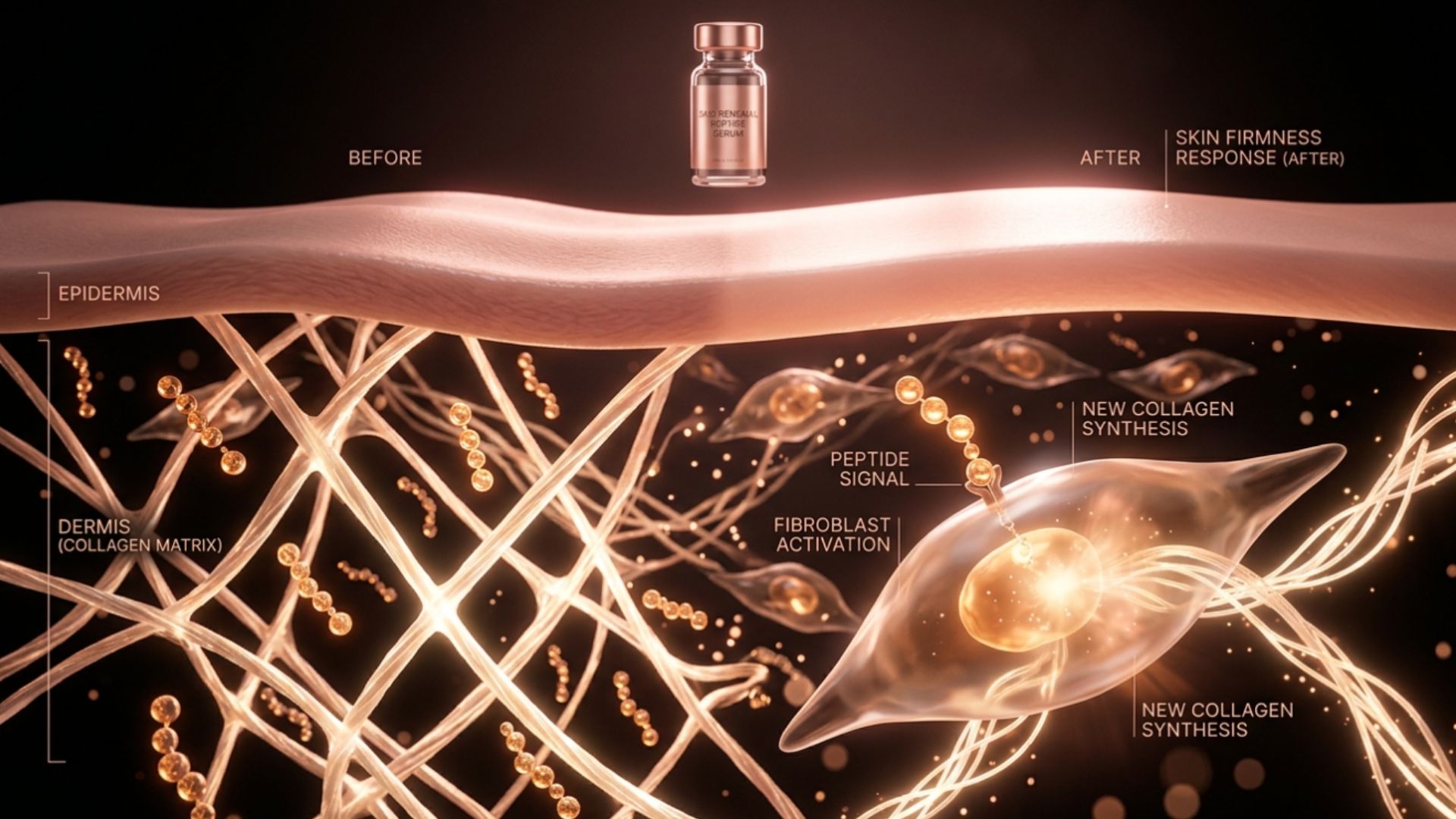
What are peptides in skincare from a formulation standpoint? They’re active compounds (usually short amino acid sequences) added to serums and moisturizers specifically to signal skin cells to behave more like younger skin cells. The most targeted mechanism involves fibroblasts, the cells responsible for producing collagen and elastin. When fibroblast activity increases, the structural proteins that give skin its firmness and elasticity are produced in greater quantities.
What do peptides do for skin when applied topically versus when delivered systemically are two different questions with different answers. Topical compounds work locally; they penetrate the upper layers of skin and act on the tissue beneath, but they don’t enter systemic circulation. Injected or nasally administered compounds work throughout the body. GHK-Cu, for example, can be used both ways and shows activity in skin remodeling research regardless of delivery method.
The practical takeaway: topical peptide skincare is a legitimate category with real biological rationale. It’s not magic, and results develop gradually over consistent use. But the underlying mechanism – stimulating collagen synthesis and supporting barrier repair – is well-supported by the research.
Are Peptides Legal to Buy and Use?
Are peptides legal to purchase? In most of the United States, yes, with an important qualifier. Most research peptides are legal to buy and sell for research purposes; they’re not approved as drugs or dietary supplements, but they’re not controlled substances either. They occupy a regulatory gray area that’s been stable for years.
The more meaningful distinction is between compounds that are research chemicals and those that have received FDA approval as prescription drugs. A small number of peptides have undergone that process and are approved as medications — semaglutide being the most prominent current example. The vast majority remain in the research compound category.
Rules vary internationally and can change. Checking the current legal status in your specific jurisdiction before ordering is always the right move.
How to Take Peptides: A Simple Beginner’s Walkthrough
How to take peptides depends almost entirely on which compound you’re working with. Some are available as oral capsules – convenient, but generally less bioavailable because digestion breaks down many peptide structures before they reach circulation. Nasal sprays offer a middle ground for compounds targeting the central nervous system, using the olfactory pathway for more direct delivery. Topical application works for skin-focused compounds.
For most research peptides, subcutaneous injection remains the most reliable route of administration. How do you take peptides via injection without it being intimidating? Start with understanding the preparation process.
Most compounds arrive as lyophilized powder – freeze-dried for stability during shipping. Before use, you need to know how to reconstitute peptides: add a measured volume of bacteriostatic water to the vial, allow the powder to dissolve by gently swirling (never shake; peptide bonds are fragile), and confirm the solution is completely clear before drawing it up.
How to inject peptides subcutaneously uses a much smaller needle than most people expect – a short, fine insulin needle that makes the process nearly painless. Subcutaneous means just under the skin, into the fatty tissue layer, not into muscle.
Where to inject peptides for subcutaneous administration: the abdomen is the most commonly used site, specifically the area a few inches from the navel, where there’s consistent subcutaneous fat. The outer thigh is a solid alternative. Rotating sites prevents repeated irritation in the same spot.
A few consistent practices that matter regardless of compound:
- Wash your hands thoroughly before handling vials or needles
- Use a fresh alcohol swab on the injection site before each administration
- Never reuse needles
- Store reconstituted compounds in the refrigerator and use within the manufacturer’s recommended timeframe
IMPORTANT POINT! Do not use peptides on your own! First, consult with a specialist, then use peptides under a doctor’s supervision.
Peptide research is a genuinely fascinating field; the biology is sophisticated, the questions being asked are important, and the compounds involved are more nuanced than either enthusiastic proponents or skeptical critics tend to acknowledge. The best approach to it is the same as any serious research: start with quality materials, understand what you’re working with, and build knowledge incrementally.
This article is for educational purposes only. All compounds discussed are for research use only and are not approved by the FDA for human consumption, medical treatment, or therapeutic application. Always consult a qualified medical professional before beginning any new health protocol.