

Survodutide vs Tirzepatide vs Retatrutide: Which Is Better for Weight Loss?
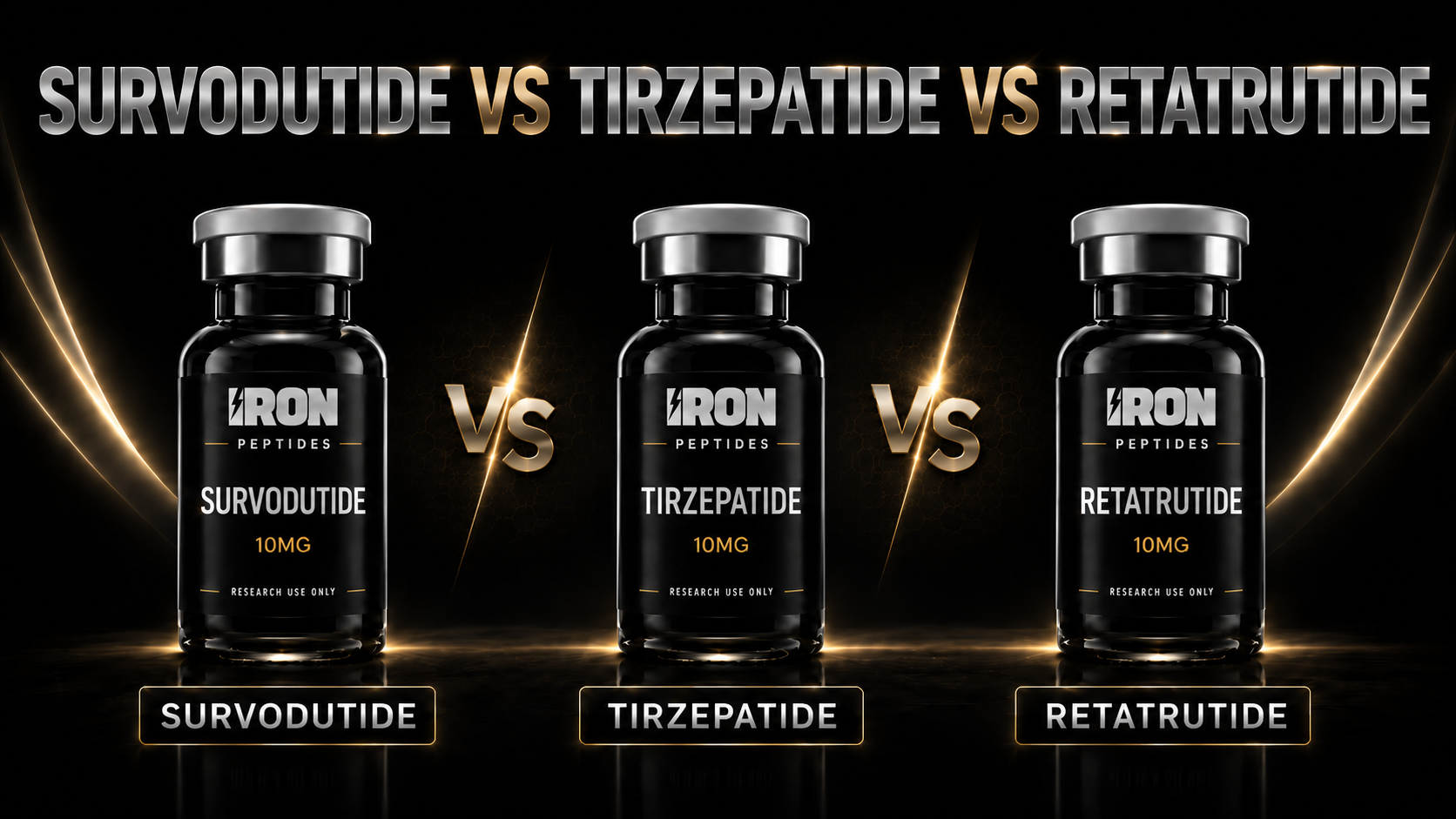
Survodutide vs tirzepatide vs retatrutide are once-weekly injectable medications that act on GLP-1 and other hormone receptors involved in appetite, blood sugar regulation and energy metabolism. However, they are not interchangeable.
Tirzepatide is already FDA-approved under the brand names Zepbound and Mounjaro. Zepbound is approved for chronic weight management in eligible adults and for moderate-to-severe obstructive sleep apnea in adults with obesity. Mounjaro is approved to improve blood sugar control in adults and children aged 10 and older with type 2 diabetes.
Survodutide and retatrutide remain investigational. Retatrutide has produced the largest reported average weight reductions in recent Phase 3 trials, while survodutide has generated particular interest for its effects on liver fat and metabolic liver disease. Neither investigational drug is currently available as an FDA-approved prescription medication.
Quick answer
Based on currently available evidence:
- Best FDA-approved and publicly available option: Tirzepatide
- Highest reported Phase 3 weight loss: Retatrutide
- Most explicitly liver-focused development program: Survodutide
- Most established safety and prescribing information: Tirzepatide
This is not yet a true head-to-head ranking. The trials differed in duration, populations, doses and statistical methods. A Phase 3 trial directly comparing retatrutide with tirzepatide is underway, but its primary completion is not expected until December 2026. No completed trial has directly compared all three medications.
Survodutide vs Tirzepatide vs Retatrutide: Comparison
| Feature | Tirzepatide | Survodutide | Retatrutide |
|---|---|---|---|
| Receptors targeted | GIP and GLP-1 | Glucagon and GLP-1 | GIP, GLP-1 and glucagon |
| Drug type | Dual agonist | Dual agonist | Triple agonist |
| Administration | Once-weekly injection | Once-weekly injection in trials | Once-weekly injection in trials |
| FDA status | Approved | Not approved | Not approved |
| Current brands | Zepbound and Mounjaro | No approved brand | No approved brand |
| Main current focus | Obesity, type 2 diabetes and obstructive sleep apnea | Obesity, MASLD and MASH | Obesity, type 2 diabetes and obesity-related complications |
| Key obesity result | Up to 20.9% at 72 weeks | 13.0% treatment-regimen estimate at 76 weeks; 16.6% efficacy estimate | Up to 28.3% efficacy estimate at 80 weeks |
| Publicly available by prescription | Yes | No | No |
| Established retail cost | Yes | No | No |
The weight-loss numbers above should not be treated as an apples-to-apples comparison. Tirzepatide and survodutide have peer-reviewed Phase 3 obesity publications, while the 28.3% retatrutide figure is a Lilly-reported Phase 3 efficacy-estimand result presented in 2026. Different estimands handle treatment discontinuation and missing data differently.
What Are Survodutide, Tirzepatide and Retatrutide?
What is tirzepatide?
Tirzepatide is a dual GIP and GLP-1 receptor agonist developed by Eli Lilly. It activates two hormone pathways involved in insulin release, appetite, fullness and food intake.
The FDA has approved tirzepatide under two brand names:
Zepbound is used with a reduced-calorie diet and increased physical activity for long-term weight management in adults who have:
- A body mass index, or BMI, of 30 or higher
- A BMI of 27 or higher and at least one weight-related medical condition
Zepbound is also approved for moderate-to-severe obstructive sleep apnea in adults with obesity.
Mounjaro is approved alongside diet and exercise to improve blood sugar control in adults and children aged 10 and older with type 2 diabetes. Mounjaro is not the tirzepatide brand approved specifically for chronic weight management.
What is survodutide?
Survodutide, also known by the development code BI 456906, activates GLP-1 and glucagon receptors. It is being developed by Boehringer Ingelheim after being licensed from Zealand Pharma.
The GLP-1 component is intended to reduce appetite and increase fullness. Glucagon receptor activity may increase energy expenditure and influence how the liver processes stored fat.
Survodutide completed the Phase 3 SYNCHRONIZE-1 obesity trial and is also being evaluated for metabolic dysfunction-associated steatotic liver disease, or MASLD, and metabolic dysfunction-associated steatohepatitis, or MASH. It remains investigational and is not FDA-approved for obesity, liver disease or any other use.
What is retatrutide?
Retatrutide, previously identified as LY3437943, activates three receptors: GIP, GLP-1 and glucagon. Lilly describes it as a triple hormone receptor agonist.
Retatrutide is being evaluated for obesity, type 2 diabetes, obstructive sleep apnea, knee osteoarthritis pain, cardiovascular and kidney outcomes, chronic back pain and metabolic liver disease. Lilly has now announced positive results from five Phase 3 studies, but retatrutide has not been approved by the FDA or another regulatory agency.
Lilly stated on July 23, 2026 that it intends to submit retatrutide for U.S. approval in the first quarter of 2027. That is a planned submission date, not an approval date or a guarantee that the drug will be approved.
How Do These Medications Work?
All three medications activate the GLP-1 receptor, but their additional receptor targets create meaningful differences.
GLP-1 receptor activity
GLP-1 receptor activation can:
- Reduce appetite
- Increase feelings of fullness
- Slow stomach emptying
- Support glucose-dependent insulin release
- Reduce food intake
This common GLP-1 activity helps explain why nausea, diarrhea, vomiting and constipation appear across all three drugs.
GIP receptor activity
GIP is another incretin hormone involved in glucose-dependent insulin secretion and metabolic signaling.
Tirzepatide activates GIP and GLP-1 receptors. Retatrutide also activates these two receptors, but adds glucagon receptor activity. Survodutide does not activate the GIP receptor.
Glucagon receptor activity
Glucagon is commonly associated with raising blood glucose, but carefully balanced glucagon receptor activity within a multi-receptor drug may also influence:
- Energy expenditure
- Fat oxidation
- Liver fat metabolism
- Cardiometabolic function
Both survodutide and retatrutide activate glucagon receptors. This differentiates them from tirzepatide and may help explain their effects on liver fat, body composition and energy metabolism.
The simplest mechanism comparison
Tirzepatide: GIP plus GLP-1
Primarily combines appetite regulation with glucose-dependent metabolic effects.
Survodutide: Glucagon plus GLP-1
Combines appetite reduction with a stronger focus on energy expenditure and liver metabolism.
Retatrutide: GIP plus GLP-1 plus glucagon
Combines all three pathways in an effort to reduce food intake while also affecting glucose control and energy expenditure.
Having more receptor targets does not automatically make a medication safer or better for every patient. Dose, tolerability, medical conditions, long-term outcomes and regulatory review all matter.
Uses and Eligibility
Who may qualify for tirzepatide?
For chronic weight management, Zepbound is approved for adults with obesity or adults with overweight plus at least one related medical condition, such as high blood pressure, high cholesterol, type 2 diabetes, cardiovascular disease or obstructive sleep apnea. It must be used with reduced calorie intake and increased physical activity.
For type 2 diabetes, Mounjaro is approved for adults and children aged 10 and older. The maximum approved dose differs between adults and children, and treatment must be prescribed and monitored by a qualified healthcare professional.
Who may qualify for survodutide?
Survodutide has no public prescribing eligibility because it is not an approved medication. People can receive it only through an appropriately authorized clinical trial for which they meet the study’s inclusion criteria.
For example, SYNCHRONIZE-1 enrolled adults without diabetes who had a BMI of at least 30, or a BMI of at least 27 with an obesity-related complication. Those trial criteria should not be interpreted as an approved prescribing label.
Who may qualify for retatrutide?
Retatrutide also has no approved prescribing criteria. Access is limited to Lilly-sponsored or otherwise properly authorized clinical trials.
Different retatrutide trials enroll different populations, including people with obesity, type 2 diabetes, severe obesity and cardiovascular disease, osteoarthritis or obstructive sleep apnea. Meeting general BMI criteria does not make someone eligible to obtain retatrutide outside a registered trial.
Are These Medications Approved for Weight Loss?
Is tirzepatide approved for weight loss?
Yes. Tirzepatide is FDA-approved for chronic weight management under the brand name Zepbound.
It is important to distinguish between the two tirzepatide brands. Zepbound has the weight-management indication, while Mounjaro is labeled for type 2 diabetes. They contain the same active ingredient but have different FDA-approved uses.
Is survodutide approved for weight loss?
No. Survodutide has completed a major Phase 3 obesity study, but it remains investigational. Positive clinical-trial results do not allow a manufacturer to sell a drug before the regulatory application and review processes are complete.
Is retatrutide approved for weight loss?
No. Retatrutide is not FDA-approved and is not legally marketed as a prescription weight-loss drug.
Lilly plans to submit it for U.S. approval in the first quarter of 2027. Its eventual availability will depend on submission, FDA review, manufacturing review, labeling negotiations and the final regulatory decision.
Survodutide vs Tirzepatide vs Retatrutide for Weight Loss
Tirzepatide weight-loss results
In the Phase 3 SURMOUNT-1 trial, adults with obesity or overweight and at least one related complication, but without diabetes, received tirzepatide or placebo for 72 weeks.
Average weight reductions were:
| Weekly dose | Average weight reduction |
|---|---|
| Tirzepatide 5 mg | 15.0% |
| Tirzepatide 10 mg | 19.5% |
| Tirzepatide 15 mg | 20.9% |
| Placebo | 3.1% |
At the 15-mg dose, 91% of participants lost at least 5% of their body weight, and 57% lost at least 20%. These results helped establish tirzepatide as one of the most effective currently approved medications for obesity.
Survodutide weight-loss results
In the peer-reviewed Phase 3 SYNCHRONIZE-1 trial, 725 adults with obesity or overweight and an obesity-related complication received survodutide or placebo for 76 weeks.
Using the treatment-regimen estimand—which incorporates treatment discontinuation and certain additional events—average weight loss was:
- 12.2% with survodutide 3.6 mg
- 13.0% with survodutide 6 mg
- 5.4% with placebo
A separate efficacy estimand, designed to estimate results had participants remained on treatment without prohibited weight-management therapy, produced weight loss of up to 16.6%. Both figures are legitimate, but they answer different statistical questions.
Retatrutide weight-loss results
In Lilly’s Phase 3 TRIUMPH-1 trial, 2,339 adults with obesity or overweight and a related condition, but without diabetes, received retatrutide or placebo for 80 weeks.
Using the efficacy estimand, average weight loss was:
| Weekly dose | Average weight reduction |
|---|---|
| Retatrutide 4 mg | 19.0% |
| Retatrutide 9 mg | 25.9% |
| Retatrutide 12 mg | 28.3% |
| Placebo | 2.2% |
At 12 mg, 45.3% of participants lost at least 30% of their starting weight. In a prespecified extension involving participants who began with a BMI of at least 35, average weight loss reached 30.3% at 104 weeks.
These are striking results, but the comparison with tirzepatide and survodutide remains provisional. The 28.3% figure uses an efficacy estimand, and the full TRIUMPH-1 results have not yet been published as a complete peer-reviewed journal article.
Which medication appears to produce the most weight loss?
Based on the highest-dose results currently reported, the apparent order is:
- Retatrutide
- Tirzepatide
- Survodutide
However, this ranking comes from separate trials rather than a completed head-to-head study. Differences in participant characteristics, baseline BMI, study duration, dose escalation, discontinuation and statistical analysis can materially affect the final percentages.
The ongoing TRIUMPH-5 trial is directly comparing retatrutide with tirzepatide in approximately 800 adults with obesity. Until those results are available, claims that retatrutide definitively outperforms tirzepatide should be presented as preliminary rather than proven.
Side Effects
The most common adverse effects of all three drugs involve the digestive system. This is expected because all three activate GLP-1 receptors, which affect appetite and gastrointestinal movement.
Tirzepatide side effects
Common Zepbound side effects include:
- Nausea
- Diarrhea
- Vomiting
- Constipation
- Abdominal pain
- Indigestion
- Injection-site reactions
- Fatigue
- Belching
- Hair loss
- Heartburn or gastroesophageal reflux
The approved Zepbound label also contains a boxed warning about thyroid C-cell tumors observed in rats. It is unknown whether tirzepatide causes these tumors in humans. The medication is contraindicated in people with a personal or family history of medullary thyroid carcinoma or Multiple Endocrine Neoplasia syndrome type 2. Additional warnings address severe gastrointestinal reactions, pancreatitis, gallbladder problems, dehydration-related kidney injury, allergic reactions and hypoglycemia when combined with certain diabetes drugs.
Survodutide side effects
In SYNCHRONIZE-1, gastrointestinal events occurred in:
- 80.9% of participants receiving 3.6 mg
- 89.7% of participants receiving 6 mg
- 47.9% of participants receiving placebo
The events were generally mild to moderate and most often included nausea, vomiting, diarrhea and constipation. Approximately 19% of survodutide-treated participants discontinued because of gastrointestinal adverse events, compared with 2.9% of participants receiving placebo.
The relatively high discontinuation rate may be an important consideration in future dosing recommendations. It cannot yet be assumed that survodutide is less tolerable than every alternative because the trials used different dose-escalation schedules and enrolled different participants.
Retatrutide side effects
Retatrutide’s most commonly reported adverse events have also been gastrointestinal, including nausea, diarrhea, vomiting and constipation. In TRIUMPH-1, adverse-event discontinuation ranged from approximately 4% to 11% across retatrutide groups, with gastrointestinal events being the most common reason for stopping treatment.
Retatrutide trials have additionally reported:
- Dysesthesia, such as tingling or altered skin sensation
- Injection-site reactions
- Decreased appetite
- Low blood pressure in some participants, particularly those using blood-pressure medication
Because retatrutide is investigational, its final contraindications, warnings and approved safety label have not been established.
Which one has the fewest side effects?
There is not enough direct evidence to declare a clear winner.
Tirzepatide has the advantage of an established FDA label and substantially more post-approval experience. Survodutide produced a notable gastrointestinal discontinuation rate in SYNCHRONIZE-1. Retatrutide’s lower doses may be better tolerated than its higher doses, but complete regulatory safety review is still pending.
An investigational drug’s lack of a boxed warning does not mean it is safer. Investigational drugs do not yet have finalized FDA-approved labels.
Liver Health and MASH
Liver health may become one of the most important differences among these medications.
Survodutide and liver health
Survodutide has the most explicitly liver-focused development program of the three.
In a Phase 2 trial involving people with biopsy-confirmed MASH and liver fibrosis, improvement in MASH without worsening of fibrosis occurred in up to 62% of participants receiving survodutide, compared with 14% receiving placebo. Up to 67% experienced at least a 30% reduction in liver fat.
More recently, the Phase 3 SYNCHRONIZE-MASLD trial found that 84.2% of participants receiving survodutide achieved at least a 30% reduction in liver fat under the efficacy estimand, compared with 24.3% receiving placebo. Approximately six in 10 survodutide-treated participants reached liver-fat normalization after 48 weeks.
A body-composition substudy of SYNCHRONIZE-1 also reported reductions of up to 63.1% in liver fat and 34% in visceral fat among evaluated participants. These findings do not constitute approval for liver disease, but they help explain why survodutide is frequently described as a liver-focused obesity candidate.
Tirzepatide and liver health
Tirzepatide has also produced encouraging MASH results.
In a Phase 2 trial, MASH resolution without worsening of fibrosis occurred in:
- 44% with tirzepatide 5 mg
- 56% with tirzepatide 10 mg
- 62% with tirzepatide 15 mg
- 10% with placebo
Tirzepatide is not currently FDA-approved specifically to treat MASH.
Retatrutide and liver health
Retatrutide’s glucagon receptor activity makes it scientifically relevant to liver-fat metabolism, and Lilly is studying it in metabolic dysfunction-associated steatotic liver disease. However, its development program has so far produced less mature liver-specific evidence than survodutide’s.
For someone whose central concern is confirmed MASH or significant liver fibrosis, treatment decisions should be based on approved indications and specialist guidance—not solely on which investigational drug appears most promising.
Costs and Availability
Tirzepatide cost
Tirzepatide is the only one of the three with legitimate commercial pricing.
As of July 2026, Lilly advertises Zepbound self-pay options starting at:
- $299 per month for the 2.5-mg initiation dose
- $399 per month for 5 mg
- $449 per month for 7.5 mg through 15 mg under an eligible refill-based self-pay program
Regular prices, taxes, fees and program requirements may differ. The amount a patient actually pays depends heavily on insurance coverage, dose, pharmacy and savings-program eligibility.
Lilly lists Mounjaro’s price at $1,112.16 for a 28-day supply before insurance or discounts, while its current LillyDirect self-pay program starts at $499 per month for eligible prescriptions.
These programs and prices can change, so cost figures should always be dated when published.
Survodutide cost
Survodutide has no legitimate retail price because it is not approved or commercially available. Pricing displayed by websites selling purported “research” survodutide does not represent the cost of an FDA-reviewed pharmaceutical product.
Retatrutide cost
Retatrutide also has no approved retail price. Lilly has not announced how it would price the medication if it is approved.
The FDA has warned businesses selling products represented as retatrutide. Such products are unapproved, may be misbranded and have not undergone FDA review for identity, purity, quality, dosing, safety or effectiveness.
Which Is Better: Survodutide, Tirzepatide or Retatrutide?
There is no single answer for every goal.
Best option available now: Tirzepatide
Tirzepatide is the practical choice among these three because it has completed regulatory review and is available by prescription.
It has:
- An FDA-approved obesity indication
- An established dosing schedule
- An approved safety label
- Insurance and manufacturer-support pathways
- Strong Phase 3 weight-loss evidence
- An additional FDA-approved indication for obstructive sleep apnea in adults with obesity
Greatest reported weight-loss potential: Retatrutide
Retatrutide currently has the strongest reported average weight-loss result, reaching 28.3% at 80 weeks in TRIUMPH-1’s efficacy analysis.
Nevertheless, it remains investigational. Its benefits and risks still require full regulatory review, and the results of the direct tirzepatide comparison have not yet been reported.
Most liver-focused investigational option: Survodutide
Survodutide’s development strategy is particularly focused on reducing liver fat and treating MASLD and MASH.
Its total weight reduction in the Phase 3 obesity trial was lower than the headline figures reported for tirzepatide and retatrutide. However, its visceral-fat, liver-fat and body-composition findings may eventually differentiate it for selected metabolic-liver populations.
Best option for type 2 diabetes now: Tirzepatide
Mounjaro is already approved for type 2 diabetes, including in children aged 10 and older. Retatrutide and survodutide have produced or are generating diabetes-related trial data, but neither is approved for diabetes.
Frequently Asked Questions
Is retatrutide better than tirzepatide?
Retatrutide has produced more average weight loss in separate Phase 3 trials: up to 28.3% at 80 weeks versus 20.9% for tirzepatide at 72 weeks. That does not yet prove superiority because the results came from different studies and used different analyses. The ongoing TRIUMPH-5 study is designed to compare the two drugs directly.
Which causes more weight loss: survodutide or tirzepatide?
Current Phase 3 evidence favors tirzepatide for total body-weight reduction. Tirzepatide produced up to 20.9% average weight loss in SURMOUNT-1, while survodutide produced 13.0% under the primary treatment-regimen analysis and up to 16.6% under its efficacy analysis in SYNCHRONIZE-1. These were not head-to-head trials.
Which causes more weight loss: survodutide or retatrutide?
Cross-trial results favor retatrutide for total weight loss. Retatrutide reached 28.3% in its 80-week Phase 3 efficacy analysis, compared with survodutide’s 13.0% treatment-regimen and 16.6% efficacy estimates at 76 weeks. Retatrutide’s result has not yet been confirmed in a direct comparison with survodutide.
Is survodutide available to the public?
No. Survodutide is an investigational drug. It may be administered only through an appropriate clinical trial, and products sold elsewhere have not been established as FDA-approved survodutide.
Can you get a retatrutide prescription?
No. There is no approved retatrutide prescription product as of July 24, 2026. Lilly plans a U.S. regulatory submission in the first quarter of 2027, but there is no confirmed approval or public launch date.
Which is better for fatty liver disease?
Survodutide has the most extensive liver-focused development program and strong data for reducing liver fat. Tirzepatide has also produced encouraging Phase 2 MASH results. Neither drug is currently FDA-approved specifically for MASH, so patients with liver disease should discuss approved treatment options with a hepatologist or other qualified clinician.
Are all three GLP-1 medications?
All three activate GLP-1 receptors, but none is a GLP-1-only drug:
- Tirzepatide targets GIP and GLP-1
- Survodutide targets glucagon and GLP-1
- Retatrutide targets GIP, GLP-1 and glucagon
Can tirzepatide, survodutide and retatrutide be combined?
They should not be combined outside a properly designed clinical study. Zepbound’s approved prescribing information states that it should not be used with another tirzepatide-containing product or another GLP-1 receptor agonist. The safety of combining it with investigational multi-receptor drugs has not been established.
The Bottom Line
The most important difference in the survodutide vs tirzepatide vs retatrutide comparison is not simply the number of receptors each drug activates.
Tirzepatide is the only FDA-approved and publicly available option. It combines substantial weight loss with established prescribing guidance, known contraindications and real-world clinical experience.
Retatrutide has produced the largest reported Phase 3 weight reduction and may become a major future obesity treatment. For now, its results remain subject to full publication and regulatory review.
Survodutide produced less overall weight loss in its first Phase 3 obesity trial, but its effects on liver fat, visceral fat and metabolic liver disease may give it a distinct role if future studies support approval.
No one should obtain purported survodutide or retatrutide from peptide sellers or use either drug outside an authorized clinical trial. The FDA has not evaluated such products for safety, quality, purity or effectiveness.
Medical disclaimer: This article is for educational purposes and does not provide medical advice, diagnosis or treatment. Medication decisions should be made with a licensed healthcare professional familiar with the patient’s medical history, current medications and treatment goals.
Related Articles
Survodutide vs tirzepatide vs retatrutide are once-weekly injectable medications that act on GLP-1 and other hormone receptors
- July 24, 2026
Survodutide vs Tirzepatide: Dual incretin agonists have become one of the most active areas in metabolic peptide
- July 23, 2026
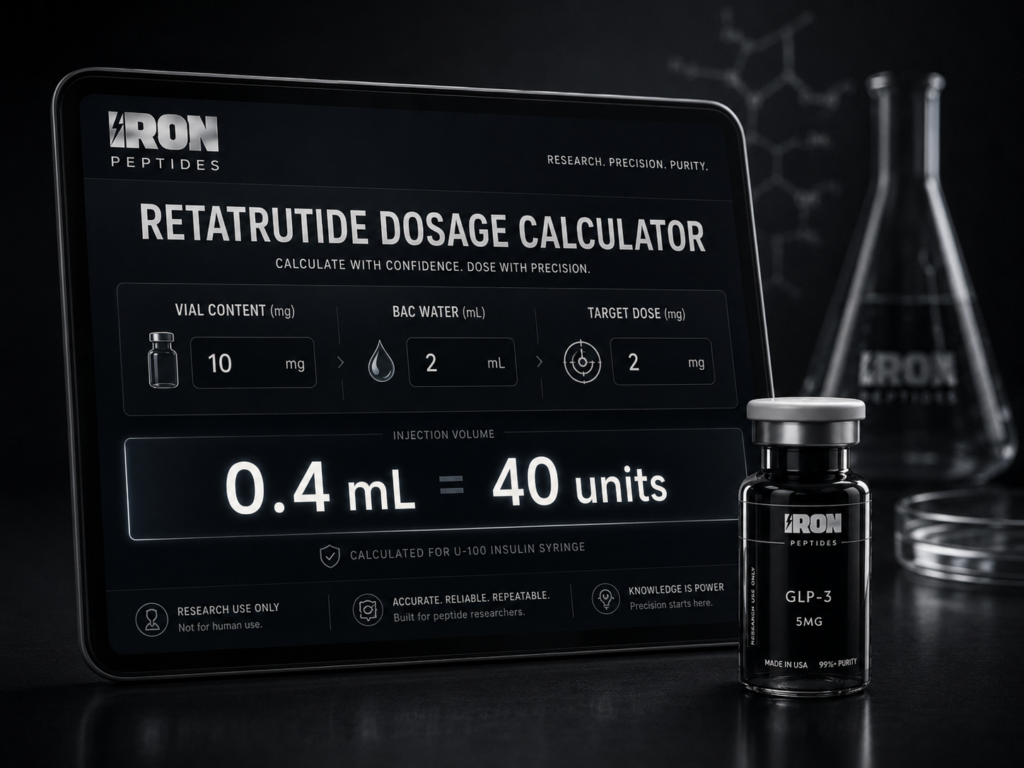
A retatrutide dosage calculator solves one problem: converting a vial’s raw peptide content into a syringe unit
- July 22, 2026