Digestive problems have a way of gradually taking over your life. What starts as occasional bloating or discomfort after meals slowly becomes a daily negotiation with food, energy, and comfort. For many people, that journey involves years of conventional treatments that manage symptoms without addressing what’s actually going wrong at the tissue level. That gap (between symptom management and actual repair) is where research into peptides for gut health has generated serious scientific interest.
Our article covers what the research shows about BPC-157 and related compounds, how they differ from standard digestive treatments in their mechanism, and what realistic expectations look like for researchers studying this area. Everything here is educational. These are research compounds, not FDA-approved treatments, and nothing in this article constitutes medical advice.
Why BPC-157 Is the Standout Among Gut Health Peptides
BPC-157 gut health research has gained traction for a reason that’s actually quite elegant: this compound comes from the digestive system in the first place. BPC stands for Body Protection Compound. It’s a 15-amino acid sequence derived from a protein found naturally in human gastric juice. That origin isn’t just interesting trivia; it has real functional implications.
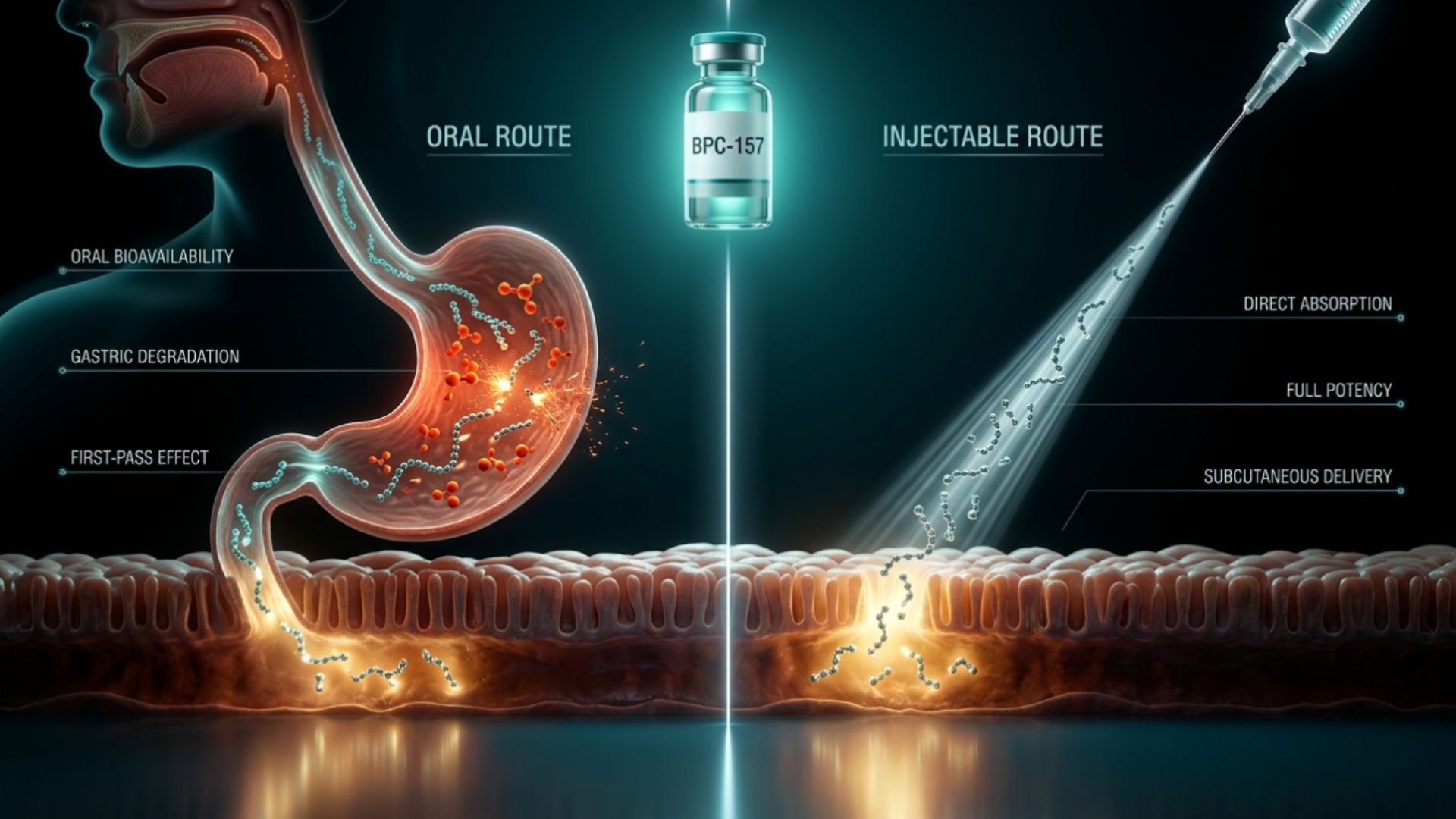
Most peptides don’t survive oral administration. Stomach acid and digestive enzymes break peptide bonds apart before the compound can do anything useful. BPC-157 is unusually stable in this environment, making it one of the few gut-health peptides that remain active when delivered orally. For researchers studying digestive tissue specifically, that’s a significant practical advantage.
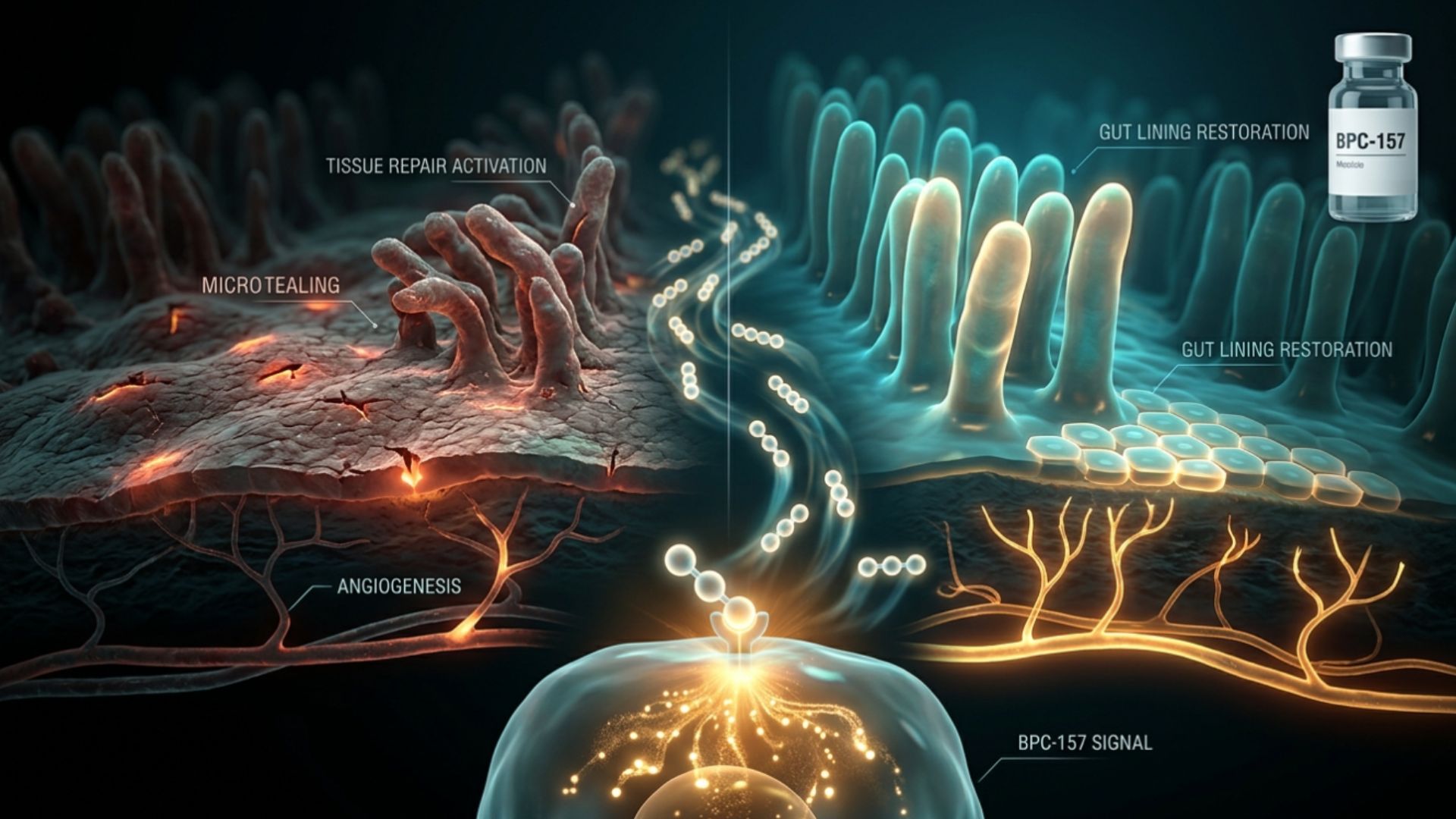
The primary mechanism studied in preclinical research centers on angiogenesis – the formation of new blood vessels. When tissue is damaged, one of the limiting factors in repair is the blood supply. New vessels bring oxygen, nutrients, and immune cells to the site of injury. In animal models, BPC-157 for gut health has consistently shown the ability to promote this vascular regeneration, accelerating healing in the gut lining and reducing local inflammation simultaneously. The data on NSAID-related stomach damage, alcohol-induced ulceration, and general mucosal injury have been particularly consistent across multiple studies.
BPC-157 for Leaky Gut and Intestinal Barrier Repair
The concept of leaky gut (more precisely, intestinal permeability) refers to a breakdown in the structural integrity of the gut lining. The intestinal wall relies on what researchers call tight junctions: protein structures that seal the gaps between intestinal cells, preventing undigested particles, bacteria, and toxins from passing into systemic circulation. When those junctions break down, the immune system encounters materials it wasn’t designed to handle in the bloodstream, resulting in chronic systemic inflammation.
BPC-157 leaky gut research is compelling because the mechanism is direct. The compound appears to influence the specific proteins that regulate tight junction integrity, thereby supporting the physical reconstruction of the gut barrier rather than merely reducing downstream inflammatory responses. That’s a meaningful distinction, treating the structural problem rather than the immune reaction it causes.
In animal models and anecdotal human research, the reported downstream effects of improved barrier function are broad: reduced bloating, improved food tolerance, clearer cognition, decreased joint discomfort, and improvements in skin conditions with inflammatory components. These effects make biological sense. Systemic inflammation driven by intestinal permeability touches multiple systems simultaneously, so repairing the source can produce changes that seem unrelated to digestion on the surface.
The important caveat here is the timeline. Intestinal permeability typically develops over years of dietary irritation, stress, and environmental exposure. It doesn’t reverse quickly, and research timelines in this area are measured in weeks and months rather than days.
BPC-157 for IBS and Inflammatory Digestive Conditions
BPC-157 IBS research addresses a different but overlapping problem. Irritable bowel syndrome isn’t primarily a structural issue in the way that leaky gut is – it involves functional dysregulation of the gut-brain axis, smooth muscle behavior, and visceral sensitivity. What makes BPC-157 for gut health relevant here is its demonstrated effect on gut-brain signaling pathways in animal models. The compound appears to interact with the nitric oxide system and the vagus nerve, both of which play significant roles in gut-brain communication.
In practical terms, researchers studying IBS-type symptoms report patterns of reduced cramping, more regular motility, and decreased urgency. For inflammatory bowel conditions like Crohn’s disease and ulcerative colitis, the anti-inflammatory and tissue-regeneration mechanisms are more directly relevant; animal models consistently show reductions in intestinal swelling and accelerated healing of ulcerated tissue.
The honest framing here: IBS and IBD are complex conditions with individual triggers, varying disease patterns, and well-established conventional treatment pathways. Research compounds are studied alongside those frameworks, not instead of them. Anyone managing a diagnosed inflammatory bowel condition should do so under professional medical oversight.
BPC-157 for Gut Health Dosage – Oral vs Injectable
The BPC-157 for gut health dosage question is one of the most commonly searched topics in this area, and it connects directly to a genuinely important methodological decision: oral versus injectable administration.
For researchers focused specifically on digestive tissue, oral administration has a strong rationale. Because BPC-157 is stable in gastric acid, oral delivery routes the compound directly through the tissue it’s meant to support. Capsule and liquid formulations both maintain compound integrity throughout the digestive tract. This makes oral administration particularly appropriate for studies targeting the gut lining directly.
Injectable subcutaneous administration takes a different path – systemic circulation first, then distribution throughout the body. For research protocols that include musculoskeletal healing alongside gut repair, the injectable route may offer broader coverage. The tradeoff is that the compound reaches gut tissue indirectly rather than making immediate contact with the mucosal surface.
BPC-157 for gut health dosage decisions in research contexts depend on multiple individual variables – body composition, the severity and nature of the tissue damage being studied, and what other compounds are part of the protocol. At Iron Peptides, our Peptide Calculator is designed to help researchers systematically work through these variables rather than guessing. Every product ships with third-party-verified COA documentation (HPLC- and mass spectrometry-confirmed) because BPC-157 gut health research is only meaningful when the compound being studied is what it’s labeled as.
Best Peptides for Gut Health Beyond BPC-157
The best peptides for gut health research don’t begin and end with a single compound. BPC-157 is the most studied option and the most logical starting point, but several complementary compounds address mechanisms that BPC-157 doesn’t cover as directly:
- KPV is a tripeptide derived from alpha-MSH with potent anti-inflammatory activity specifically in intestinal tissue. While BPC-157 focuses on physical repair and vascular regeneration, KPV targets the inflammatory environment that slows repair. Stacking the two creates a protocol in which one compound addresses structure, and the other addresses inflammatory interference. This complementary approach frequently appears in research designs for severe or persistent gut damage.
- Larazotide acetate is worth highlighting for researchers specifically interested in intestinal permeability. It targets tight junction regulation directly and has been studied in clinical trials for celiac disease – one of the conditions most directly defined by barrier dysfunction.
- TB-500 (Thymosin Beta-4) brings cell migration and tissue regeneration properties to the mix. For cases where gut damage is particularly stubborn or long-standing, adding a compound that accelerates cellular movement into damaged areas can complement BPC-157’s angiogenic effects.
- Glutamine is an amino acid, but it appears in virtually every serious gut repair research protocol because intestinal cells use it as a primary fuel source. A gut that’s running low on glutamine is a gut that can’t repair efficiently, regardless of what signaling compounds are present.
Peptides for Digestion – Realistic Timelines and What to Expect
Peptides for digestion research require patience and honest benchmarking. The biology of gut repair is gradual by nature: tissue regeneration, tight junction restoration, and vascular remodeling don’t happen on a week-to-week timeline in the way that, say, acute pain relief does.
Early in a research protocol, the most commonly noted changes are functional rather than structural: reduced post-meal bloating, improved regularity, and decreased food-sensitivity reactions. These reflect the anti-inflammatory effects kicking in before the deeper structural repair has had time to progress.
Actual structural healing – the restoration of mucosal integrity and tight junction function – typically requires sustained research protocols measured in weeks, not days. And for cases involving years of accumulated damage, the timeline extends further.
The variable that matters more than any compound, though, is whether the source of damage is still active. A research protocol studying gut repair in an environment where the ongoing irritants haven’t been removed is studying a losing battle. Dietary triggers, heavy alcohol use, chronic NSAID use, and unmanaged stress all create damage faster than tissue repair can keep up with them. Any serious gut health research protocol addresses the inputs alongside the repair mechanisms.
Safety, Side Effects, and What the Research Doesn’t Cover
In animal studies, BPC-157 has a remarkably clean safety profile; no significant toxicity has been documented even at high doses across multiple species. Human anecdotal data reflect something similar: mild fatigue in early use, occasional brief nausea, and localized injection site reactions for those using subcutaneous administration. Serious adverse events aren’t a pattern in the available data.
The significant caveat is what the research doesn’t cover. There are no large-scale human clinical trials. Long-term safety data in humans isn’t established. And because the compound promotes angiogenesis (new blood vessel formation), researchers studying subjects with any history of active cancer should be aware that this mechanism has theoretical implications for tumor growth, which relies on the same process.
Pregnancy and breastfeeding are categories in which the absence of data warrants caution. Without safety data in these populations, avoidance is the appropriate research default.
Is BPC-157 Right for Your Gut Issues? Practical Guidance
BPC-157 for gut health research is most clearly supported in a few specific contexts: intestinal permeability and barrier dysfunction, NSAID or alcohol-related mucosal damage, functional digestive complaints where conventional approaches haven’t produced resolution, and post-antibiotic gut rebuilding.
It’s less appropriate for researchers working with subjects who have active cancer, are pregnant or breastfeeding, or have seriously diagnosed gastrointestinal conditions that require close medical supervision, not because the compound is inherently dangerous in those contexts, but because the absence of safety data makes responsible protocol design impossible.
For researchers in the appropriate categories, the framework is consistent: quality compound, verified purity, a protocol length that matches the biology of tissue repair, and removal of ongoing irritants alongside the intervention. Tracking objective markers weekly – bloating levels, food tolerance, regularity, energy – gives research protocols the measurable structure they need to produce useful data.
This article is for educational purposes only. BPC-157 and all related compounds discussed here are for laboratory research use only. They are not FDA-approved for human consumption, medical diagnosis, or therapeutic application. Always consult a qualified medical professional before beginning any health protocol.