The history of peptides dates back to the 1970s, when researchers first developed peptide compounds. At that time, however, they were used exclusively for medical purposes. But nearly 50 years later, peptides have become available for biohacking. Riding the wave of popularity, a specific combination emerged that earned its own name: the “Wolverine stack.” We’re talking about the trio of BPC-157, TB-500, and GHK-Cu, which addresses tissue recovery from multiple angles at once (and, of course, with a significantly broader scope than each component individually).
Athletes recovering from injuries, enthusiasts with joint and tendon fatigue accumulated over years of training, as well as anyone seeking faster healing – it is this audience that has made the Wolverine stack peptide one of the most talked-about combinations.
But what exactly is this stack? Why do these three specific components work together to produce a positive effect? What results can you realistically expect? We’ll answer these and other questions in this article.
Important. All three compounds remain investigational in the US; they are not approved for medical use in humans. This material is for informational purposes only and does not constitute medical advice.
What Is the Wolverine Peptide Stack?
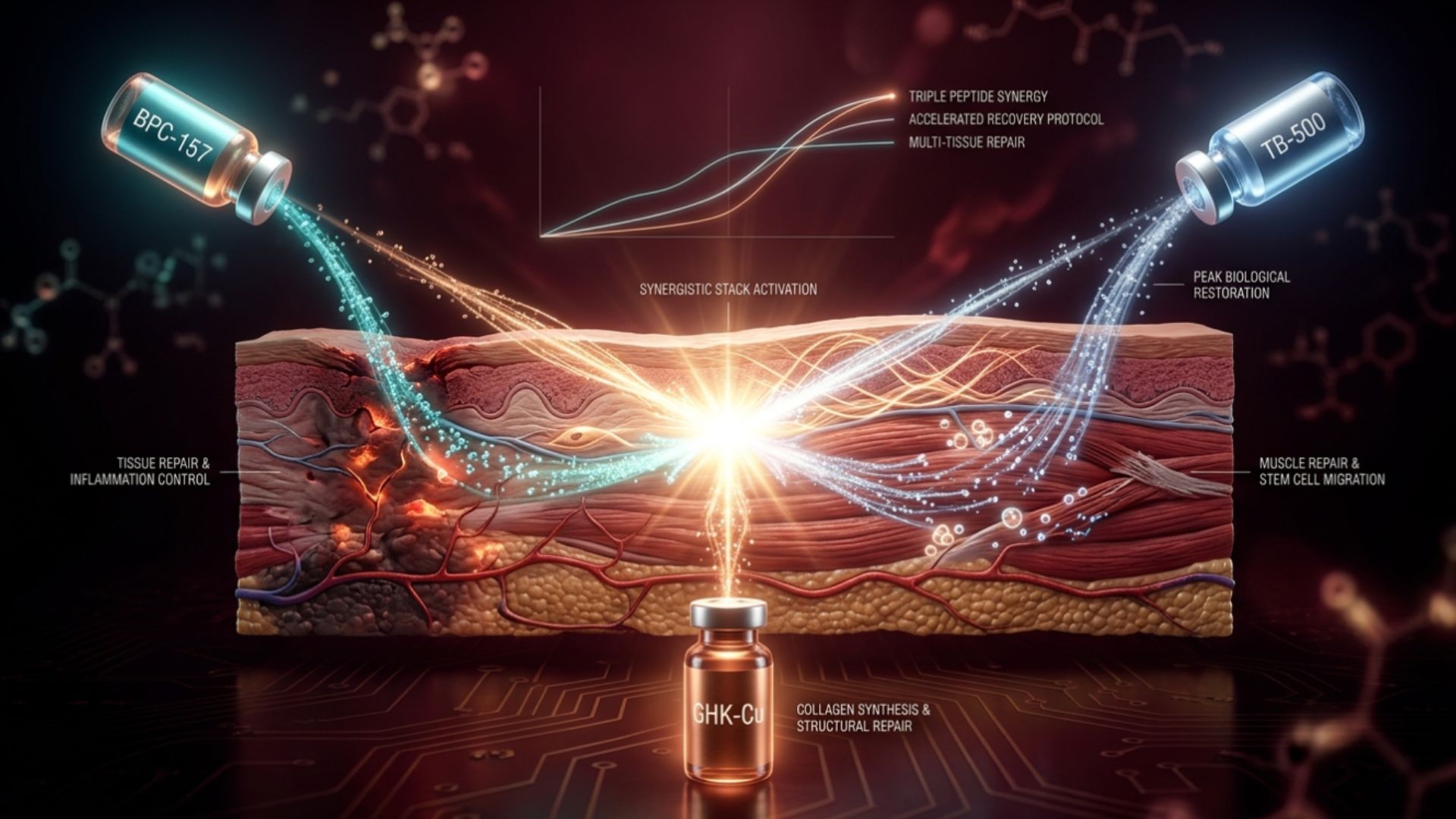
What is the Wolverine peptide stack? It is a combination of three “healing” peptides – BPC-157, TB-500, and (in the extended version) GHK-Cu. These three peptides are used together to accelerate tissue repair and healing processes. The name reflects the impressive regenerative capacity that this stack is designed to achieve.
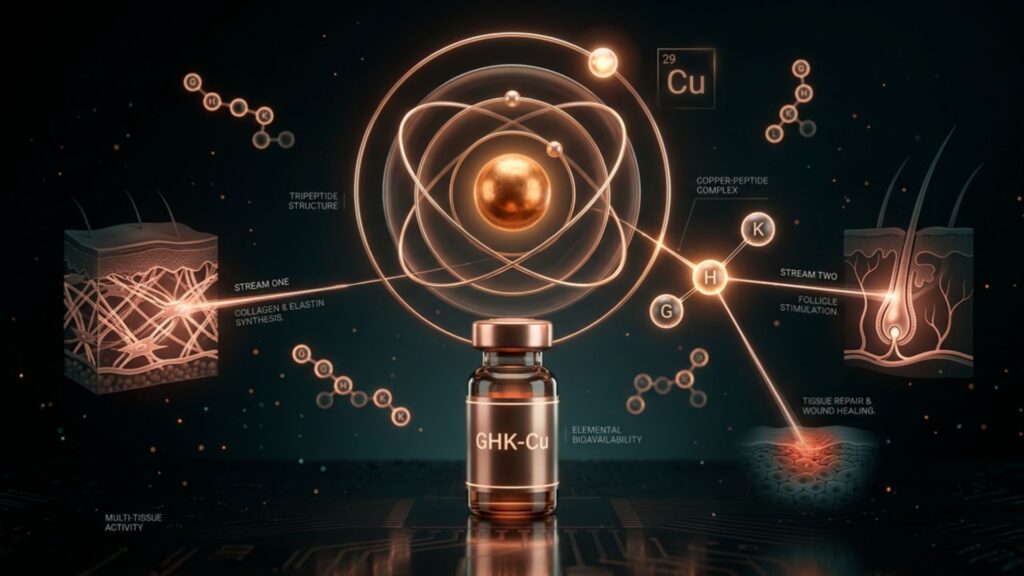
Each component serves a specific purpose. BPC-157 (Body Protection Compound) stimulates angiogenesis (the formation of new blood vessels), reduces inflammation, and supports the healing of soft tissues, the gastrointestinal tract, and connective tissue. TB-500 (synthetic thymosin beta-4) works at the level of cell migration and systemic tissue regeneration throughout the body. GHK-Cu (copper tripeptide) supports collagen synthesis, skin and connective tissue repair, as well as overall tissue remodeling.
The core of the “Wolverine stack” is most often BPC-157 + TB-500, while GHK-Cu is added to the more comprehensive version for its effects on connective tissue and skin. Together, the peptide Wolverine stack addresses recovery in several areas simultaneously:
- Blood supply
- Inflammation
- Cell regeneration
- Structural repair
Why These Three Peptides Work Better Together
The strength of the Wolverine Stack Peptide protocol lies in the way the three components complement rather than duplicate one another. BPC-157 lays the foundation for healing: it forms new blood vessels to improve the delivery of oxygen and nutrients to damaged tissue, reduces inflammation that slows recovery, and directly participates in the healing of muscles, tendons, ligaments, and gastrointestinal tissues.
TB-500 works through a different mechanism. It affects actin and stimulates cell migration, helping “repair” cells reach the site of injury and restore tissue structure systemically, throughout the body. GHK-Cu adds a third component: it stimulates the synthesis of collagen and elastin, supports the regeneration of connective tissue and skin, and possesses antioxidant and remodeling properties.
The logic is simple:
- One component is responsible for the blood supply and inflammation (BPC-157)
- The second component is responsible for cellular remodeling (TB-500)
- The third component is responsible for the synthesis of structural proteins (GHK-Cu)
That is precisely why the best peptide stack for recovery is not a single compound in high doses. It is this specific combination that completes the entire “chain” of healing. Their combined action results in faster and more complete recovery than the simple sum of each component’s effects.
Who the Wolverine Stack Is Best For
The Wolverine peptide stack is best suited for specific situations:
- Athletes recovering from soft tissue injuries (muscle strains, tendon issues, ligament damage).
- Active individuals dealing with accumulated training fatigue, chronic joint pain, or general wear and tear – anyone who needs to recover faster and train more consistently.
- People recovering from surgery (with medical clearance).
- People with gastrointestinal issues, thanks to the effect of BPC-157 on digestive system recovery within the stack.
This combination is less relevant for those specifically seeking muscle growth (GH secretagogues are better suited for this) or for general “wellness” without a specific need for recovery. The peptide stack performs best in cases of actual tissue damage or a pronounced need for recovery. But it is important to remember that a medical consultation with a specialist is necessary before making a final decision.
Wolverine Stack Peptide Dosing – The Complete Protocol
When it comes to the Wolverine stack peptide dosing, it is important to understand the general logic rather than specific numbers. The approach is built around three components: BPC-157 is typically taken daily; TB-500 is administered at a higher intensity at the start (the “loading” phase), followed by a transition to a maintenance regimen; and GHK-Cu is taken either via injection or as a topical application to the skin and superficial tissues.
The general structure of the protocol is most often described as a period of active recovery lasting several weeks, followed by a break. For combination products in which all three components are mixed in a single vial, the manufacturer’s specified concentration is followed. Administration is typically subcutaneous, and the lyophilized powder is reconstituted with bacteriostatic water.
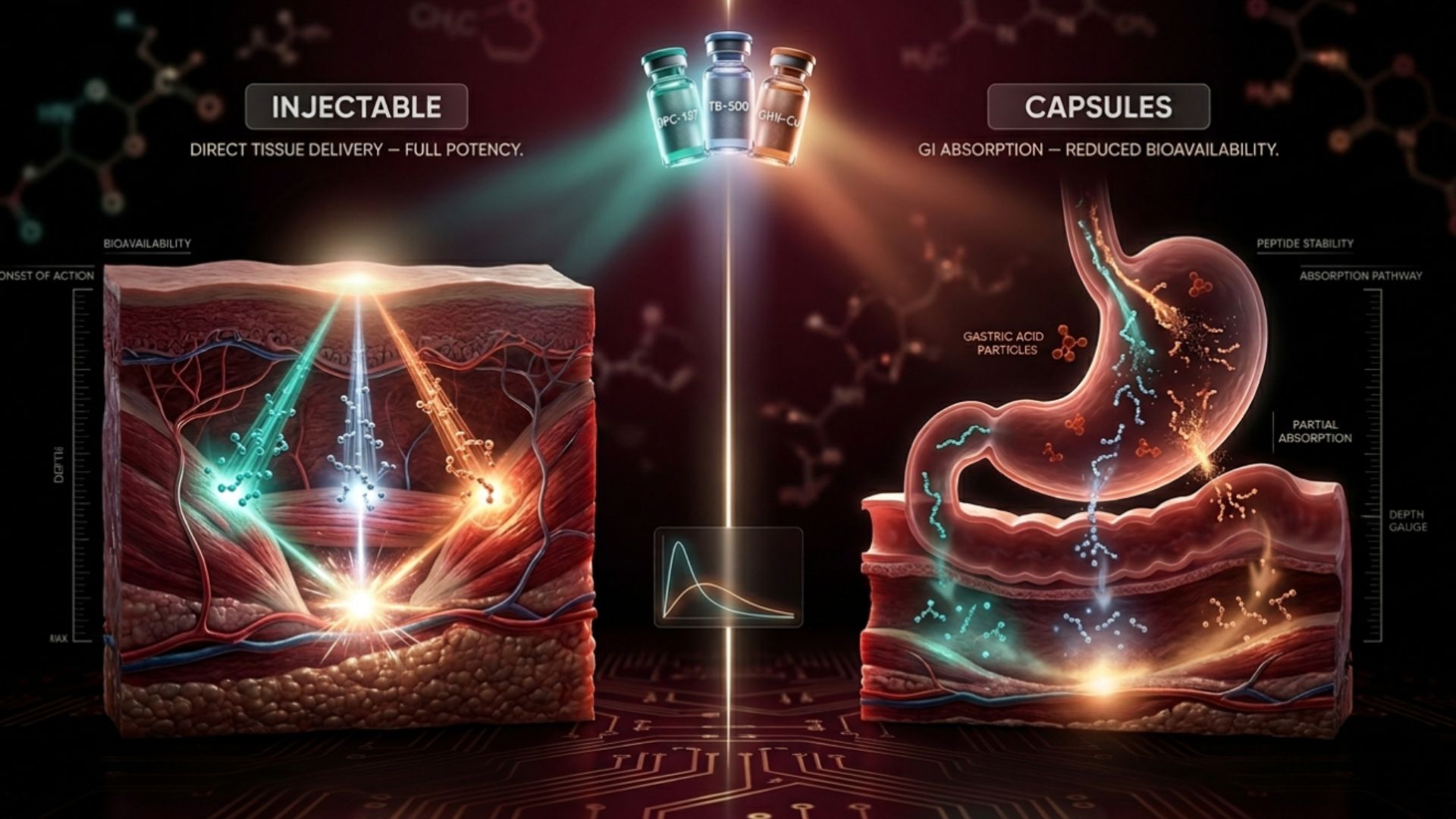
Injectable vs Capsules – How to Take the Wolverine Stack
This stack comes in two main formats, each with its own pros and cons. The injectable (subcutaneous) format is the traditional and most “complete” in terms of bioavailability: the injected subcutaneously, allowing gradual absorption into the bloodstream, and this format is considered the standard for serious recovery protocols.
Wolverine stack peptide capsules are a more convenient alternative for those who want to avoid injections. Here’s an important detail: BPC-157 is surprisingly resistant to stomach acid and works quite well when taken orally, especially for gastrointestinal recovery. However, the bioavailability of TB-500 and GHK-Cu when taken orally is significantly lower, suggesting that the capsule formulations may produce a weaker systemic effect for these two components.
This creates a practical trade-off: for local gastrointestinal recovery, capsules work well, while for systemic recovery and wound healing, the injectable format generally yields more pronounced results. Many choose the format based on their priorities: convenience and a focus on the gastrointestinal tract favor capsules, while maximum systemic recovery favors injections. A hybrid approach is also common: oral BPC-157 for convenience and gastrointestinal tract support, plus injectable TB-500 for systemic healing. The format should be chosen based on your goal and personal willingness to undergo injections.
Where to Buy the Wolverine Stack and Verify Quality
When it comes to buying the Wolverine stack peptide, the main issue in the unregulated market for research peptides is not price but verifiable quality. The stack is sold either as separate components (BPC-157, TB-500, GHK-Cu separately) or as ready-to-use mixtures combining them in a single vial or capsule.
What to look for when assessing quality: the presence of third-party certificates of analysis confirming the identity of each peptide, its purity (typically 98%+), and concentration; the reputation and name of the testing laboratory; adherence to the cold chain during delivery and storage conditions; as well as transparent product information, including batch numbers.
Exercise caution with suspiciously low prices (legitimate peptides have a real production cost), suppliers without published certificates of analysis, and those who market the stack as a “supplement” (this is a sign of non-compliance with regulatory status). Pre-mixed blends are convenient and simplify dosing, while individual components offer more flexibility. In any case, verifiable quality remains the priority, not price.
Realistic Results and Timeline From the Wolverine Stack
The Wolverine stack peptide protocol operates on biological timelines that cannot be accelerated. According to the descriptions, the first improvements are noticeable within the first 1 to 2 weeks. Most often, this involves reduced inflammation, less pain, and faster recovery. When it comes to noticeable healing of soft tissue injuries (such as strains or major tendon issues), improvements typically appear by weeks 3-4.
More serious issues (ligament damage, chronic tendinopathies) often require 6-8 weeks or longer, as these tissues have a poorer blood supply and heal more slowly. However, it is always important to remember that for health issues, you should consult with specialists who can properly assess your condition and provide appropriate recommendations.
Overall, the combination significantly speeds up recovery compared to no intervention at all and enhances the body’s natural healing processes. This means that the stack supports and accelerates what your body is already doing. The most common mistake is to expect literally instant results from the name “Wolverine”: actual healing still takes weeks. The outcome also depends heavily on what’s happening around it – rest, a gradual return to activity, sufficient protein intake, quality sleep, and rehabilitation where appropriate. The stack accelerates proper recovery practices but does not replace them.
Safety, Side Effects, and Final Considerations
Overall, this combination is well tolerated, with mild side effects: irritation at the injection site, occasional fatigue early in the cycle, mild “brain fog,” and, rarely, nausea.
The most important safety concern relates to TB-500 and GHK-Cu: both affect cell migration and tissue growth (including angiogenesis), so people with active or recent cancer should avoid this combination (enhanced cell growth and blood vessel formation could theoretically affect tumor biology). BPC-157 shows a fairly “clean” profile in animal studies, but there is no long-term data on humans yet.
All three compounds remain investigational and are not approved for medical use; they have recently been further restricted for use by compounding pharmacies in the US, and no major human safety studies have been conducted. For athletes competing in tournaments with doping controls, it is important to note that these compounds are included on the lists of prohibited substances by WADA, USADA, and most testing organizations.
To sum it all up: the best peptide stack for recovery is precisely this combination when approached sensibly – with verifiable quality through certificates of analysis, consistent use in cycles with breaks, adherence to basic recovery principles, and caution in the presence of a history of cancer or in the context of a tested sport. With a balanced approach, the Wolverine stack remains one of the most discussed and popular recovery protocols.
Important. All peptides mentioned in this text are provided for informational purposes only. The final decision regarding their use must be made by a qualified specialist – a physician or sports medicine doctor – taking into account the individual’s health status, medical history, and current medications.