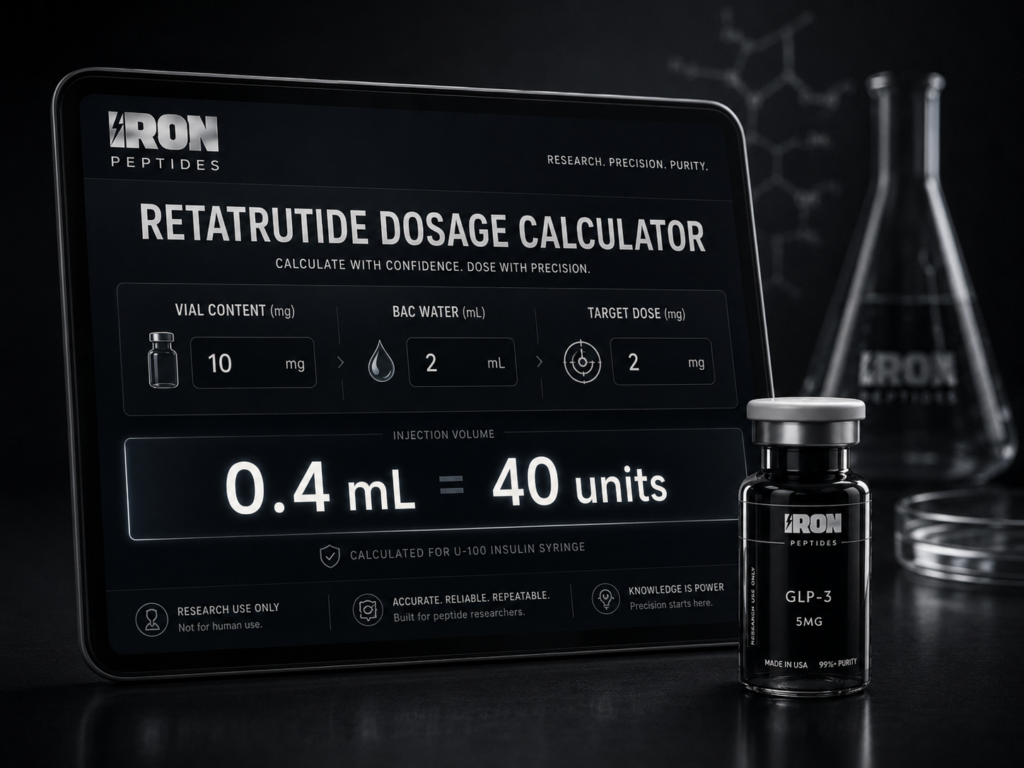

Three years ago, semaglutide was the answer to almost every question about GLP-1 peptides. Then tirzepatide arrived and raised the ceiling on what was clinically possible. Now retatrutide is in late-stage trials with weight-loss numbers that make both of its predecessors look like warm-up rounds.
The question driving most people to this article is simple: which of these weight loss peptides actually performs best, and how do they compare on the data that matters – efficacy, side effects, dosing, and cost? This guide answers that question based on the published trial evidence rather than marketing. All three compounds are covered: the FDA-approved pair and the investigational triple-agonist that’s already changing how researchers think about metabolic medicine.
One important framing note upfront: Semaglutide and Tirzepatide are approved medications available through standard clinical channels. Retatrutide is investigational, available only through research-grade sourcing and trial enrollment. That distinction affects how each should be approached.
What Are Peptides for Weight Loss? The Mechanism Behind GLP-1, GIP, and Glucagon
What are peptides for weight loss at the biological level? They’re synthetic analogs of gut hormones the body already produces after eating – mimicking and amplifying satiety signals that naturally regulate intake.
- Semaglutide targets the GLP-1 receptor. GLP-1 slows gastric emptying, increases satiety signaling to the brain, reduces food cravings, and improves insulin secretion in response to meals. The result: eating less without the fight-against-hunger experience of traditional caloric restriction.
- Tirzepatide adds the GIP receptor to that. GIP (glucose-dependent insulinotropic polypeptide) amplifies insulin response and appears to improve fat metabolism in ways that complement GLP-1 – the dual mechanism is why tirzepatide consistently outperforms semaglutide on efficacy in head-to-head data.
- Retatrutide adds glucagon receptor activation on top of both. Glucagon at this specificity increases basal metabolic rate, promotes lipolysis, and drives thermogenesis – actively burning more energy rather than just reducing intake. Single agonist → dual agonist → triple agonist. Each generation produces results that are meaningfully stronger, and the mechanism explains why.
These are the leading peptides for weight loss available today, and understanding the mechanism is the clearest way to understand why the numbers in the trials look the way they do.
Tirzepatide vs Semaglutide for Weight Loss – Head-to-Head Efficacy
The most useful comparison is built on published trial data, not anecdote.
Semaglutide’s STEP-1 trial documented approximately 14.9% body weight reduction at 68 weeks in non-diabetic adults with obesity, using the 2.4mg weekly dose. This was the result that made Wegovy a landmark product – meaningful, sustained weight loss from a pharmacological mechanism rather than willpower.
Tirzepatide’s SURMOUNT-1 trial raised that to approximately 22.5% at 72 weeks on the 15mg weekly dose. Tirzepatide vs semaglutide for weight loss, in practical terms: a 200-pound starting weight translates to roughly 30 pounds lost with semaglutide versus 45 pounds with tirzepatide, on average. Individual responses vary substantially (some people respond better to GLP-1 alone), but the population-level edge belongs to tirzepatide.
The SURMOUNT-5 direct head-to-head trial confirmed this advantage, with tirzepatide producing approximately 20% weight loss compared with roughly 14% with semaglutide in a comparative design. Tirzepatide vs semaglutide for weight loss in a controlled comparison: the dual-agonist wins on efficacy, consistently.
Retatrutide vs Tirzepatide and Retatrutide vs Semaglutide – Phase 2 Data
Retatrutide’s Phase 2 data were published by Jastreboff et al. The headline: approximately 24.2% body weight reduction at 48 weeks on the 12mg weekly dose.
Retatrutide vs tirzepatide on the raw numbers: 24.2% in 48 weeks versus 22.5% in 72 weeks. Not just a higher ceiling – a faster trajectory. Retatrutide vs semaglutide shows a larger gap: roughly 24% versus 15%, with retatrutide achieving its effect in a shorter timeframe.
The glucagon activation is the suspected driver of both the superior efficacy and the faster timeline – increasing energy expenditure through thermogenesis and lipolysis in a direction that pure appetite suppression can’t reach. The caveat worth stating clearly: Phase 2 data come from smaller samples than those in the Phase 3 trials of semaglutide and tirzepatide. Long-term durability is not yet established. These are promising numbers, not confirmed final results.
Tirzepatide vs Semaglutide Side Effects – and How Retatrutide Compares
All three share a common side-effect profile, and tirzepatide vs semaglutide side effects data show a predictable pattern: GI symptoms dominate, and intensity roughly tracks receptor activity.
Semaglutide is the most tolerable of the three for most users. Nausea, reduced appetite, occasional diarrhea or constipation, and fatigue during dose escalation are the primary complaints – all manageable with slow titration.
Tirzepatide vs semaglutide on GI burden: tirzepatide shows slightly higher rates of nausea and vomiting at therapeutic doses, though rates of severe adverse events are similar. The additional GIP activity appears to increase GI load modestly in some users.
When comparing tirzepatide vs retatrutide, retatrutide, based on Phase 2 reporting, shows the highest incidence of nausea during escalation of the three – consistent with the stronger metabolic disruption from triple-agonist activity. Most cases are resolved with continued use and slower dose escalation.
All three carry boxed warnings for medullary thyroid carcinoma risk observed in rodent studies, and are contraindicated in patients with MTC or MEN2 syndrome. Pancreatitis and gallbladder issues are documented across the class. The practical takeaway: side effects are manageable for most users when dose escalation is gradual and not rushed.

Tirzepatide vs Semaglutide Cost – and Why Retatrutide Pricing Is Still Unknown
Tirzepatide vs semaglutide cost at US list prices: both brand-name products (Zepbound and Wegovy) run approximately $1,000-$1,300 per month without insurance.
Compounded options change the math substantially. Compounded semaglutide through licensed pharmacies typically costs $200-$400 per month. Compounded tirzepatide ranges from $300 to $500. At compounded pricing, semaglutide is the cheaper option – meaningfully so for users without coverage.
Insurance coverage complicates everything. GLP-1 medications are sometimes covered for type 2 diabetes but rarely for obesity alone under many plans. The coverage picture has been shifting, but the tirzepatide vs semaglutide cost in the real world is often less about list price and more about what a specific insurer will actually pay.
Retatrutide pricing after FDA approval – projected 2026-2027 if Phase 3 continues on current trajectory – is unknown. As an investigational compound currently available only through research channels, pricing is outside standard pharmaceutical ranges.
Best Peptides for Weight Loss and Muscle Gain – The Stacking Question
One documented limitation of aggressive GLP-1 class weight-loss is lean body mass reduction. Studies consistently show that 25-40% of the total weight loss with these compounds comes from muscle when users don’t actively protect it. At the scale of weight loss these compounds produce, that’s a meaningful concern.
The strategies that work: protein intake at 1.6-2.2g per kg of body weight daily, resistance training 3-4 times per week, and slower dose titration that allows gradual deficit rather than aggressive restriction.
Some researchers exploring peptides for weight loss and muscle gain simultaneously combine GLP-class compounds with GH secretagogues like CJC-1295 and ipamorelin, or tissue repair compounds like BPC-157, to support body composition quality during the weight loss phase. Clinical evidence for these combinations is still emerging, but the mechanistic rationale is reasonable: GH optimization supports lean tissue maintenance in a caloric deficit.
The honest summary: best peptides for weight loss results that also preserve muscle composition come primarily from protocol design – adequate protein, resistance training, appropriate deficit magnitude – not from compound selection alone.
Semaglutide vs Tirzepatide vs Retatrutide – Which One Is Right for You?
Semaglutide vs tirzepatide vs retatrutide as a decision framework:
- Semaglutide is the right choice for prioritizing predictability. It has the longest safety track record, the broadest insurance coverage, the most favorable tolerability profile, and produces clinically meaningful weight loss for most users. If you want established, well-understood, and widely accessible – this is where to start.
- Tirzepatide currently delivers the best peptides for weight loss results among FDA-approved options. It’s the right choice for users who need stronger efficacy – significant obesity, type 2 diabetes, or insufficient response to semaglutide – and can manage slightly more pronounced GI effects during escalation.
- Retatrutide offers the highest demonstrated efficacy in published trial data but is investigational, has smaller long-term datasets, and has the strongest initial side-effect burden of the three. It’s appropriate for researchers and users who are comfortable with that risk profile and understand they’re working outside approved clinical use.
We carry SEMA GLP-1 and RETA GLP-3 weight loss peptides in multiple vial sizes, batch-tested by Freedom Diagnostics, with COAs available for each lot before purchase. The compound that performs best is always the one a user can access safely, afford consistently, tolerate through the escalation phase, and pair with the lifestyle changes that determine long-term outcome.