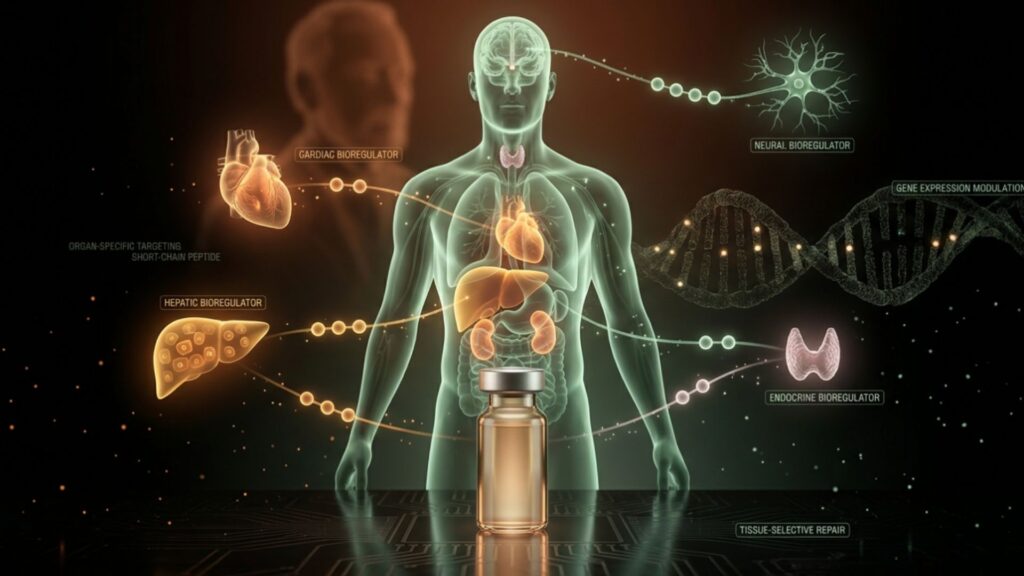
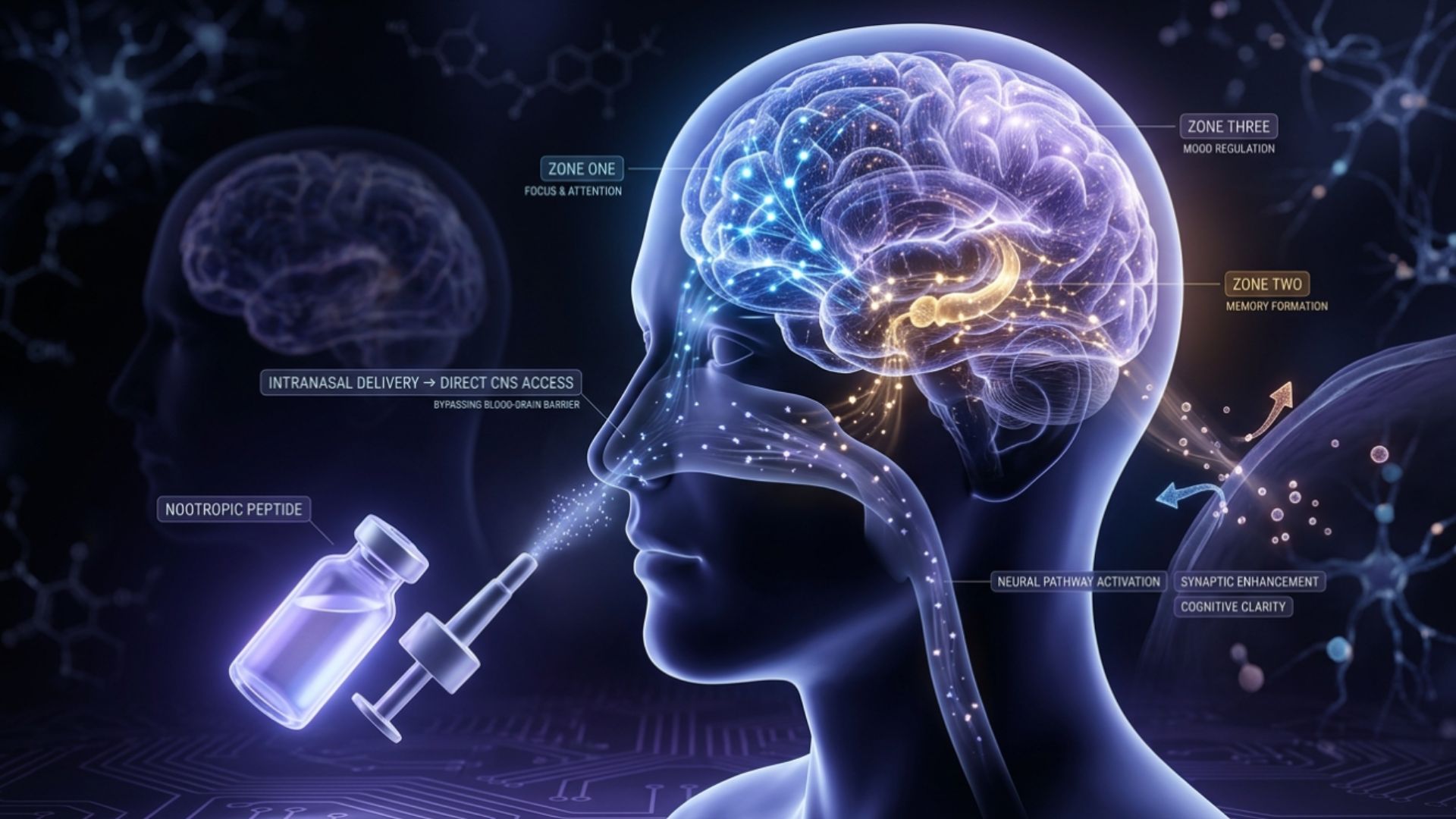
Examples studied for cognition include the Adamax nootropic peptide.
It would be rather trite to write about how quickly our world has changed and how people have literally started moving faster. Everyone already knows that. In this rapidly changing environment (especially in big cities), there is a growing demand for sharper focus, a reliable memory, and a stable mood. This demand has turned nootropics into a distinct category. But if you look at most of the popular options, they are either stimulants with the usual set of side effects (jitters and a crash afterward) or supplements with a rather limited evidence base.
Against this backdrop, nootropic peptides (such as Semax, Selank, and several other compounds) attract attention precisely because they act through distinct mechanisms: they influence the brain’s neurotrophic factors, neurotransmitter systems, and neuroplasticity, rather than simply “revving up” the nervous system. Therefore, in this article, we will examine how brain peptides support concentration, memory, and mood, which compounds have the most compelling evidence base, and much more.
Important. All peptides mentioned in this article are provided for informational purposes only. The final decision regarding their use should be made by a qualified specialist (a doctor or neurologist), taking into account the individual’s health status, medical history, and medications being taken.
How Brain Peptides Work – Mechanisms Behind Cognitive Effects
Brain peptides influence brain function through several pathways, and this is what fundamentally distinguishes them from stimulant nootropics. Many of them modulate BDNF (brain-derived neurotrophic factor) and NGF (nerve growth factor) – proteins that are critical for the growth, survival, and regeneration of neurons, as well as for the plasticity that underpins learning and memory.
Other compounds directly affect neurotransmitter systems: dopamine (motivation, concentration), serotonin (mood), acetylcholine (memory, learning), and GABA (calmness, anxiety regulation). Some peptides can partially cross the blood-brain barrier, a feature particularly relevant to intranasal formulations, which can access the brain via the olfactory pathway.
Peptides for brain function work more as a “fine-tuning” of the brain’s own processes rather than as a replacement for them: they amplify the signals responsible for concentration and memory, help balance the neurotransmitters that influence mood, protect neurons from oxidative and inflammatory stress, and support the structural repair of neural tissue. This is precisely why users often describe cognitive peptides as providing a “clearer” mental experience compared to stimulants without overstimulation, dependency, or the characteristic crash that follows the effects of caffeine or prescription stimulants.
Best Peptides for Brain Function – Semax and Focus Enhancement
Among the compounds classified as the best peptides for brain function, Semax holds the leading position, particularly in cognitive performance. It is a synthetic peptide derived from ACTH, developed in Russia. It modulates the expression of BDNF and NGF and affects the dopamine and serotonin systems, ultimately resulting in improved concentration, working memory, information processing speed, and resistance to mental fatigue.
Semax is officially used in Russia for post-stroke recovery and certain cognitive disorders, giving it a more substantial clinical history than most research peptides. According to user reports, the effects include sustained concentration during prolonged mental work, faster information “processing,” improved verbal fluency, and recovery from cognitive burnout without the nervousness and subsequent crash typical of stimulants.
Compounds in this category include Cerebrolysin (a neuropeptide complex studied for neuroprotection and cognitive support) and the more experimental Dihexa, which is being studied for its pronounced effects on synaptic connections. However, significantly less human data is available. When it comes specifically to focus and memory, Semax combines the most compelling evidence base, accessibility, and the most consistent user feedback among cognitive peptides, and therefore most often serves as the entry point for those new to this category.
Peptides for Cognitive Enhancement vs. Traditional Nootropics
Peptides for cognitive enhancement differ fundamentally from classic nootropics in both mechanism and experience. Stimulants boost alertness by “revving up” the nervous system: this works, but is accompanied by tolerance, crashes, jitters, and potential dependence.
Peptides work “higher up the chain” through growth factors and neurotransmitter systems that regulate cognitive processes. The effect is described as more sustained and less “forced.” There is a downside: peptides generally require injections or nasal administration rather than the usual pill (though some options are already available in tablet form), are more expensive, and come with all the issues associated with regulatory status and the quality of research compounds.
Many combine approaches: using peptides like Semax as a baseline for cognitive support, while reserving caffeine or L-theanine for a quick boost when needed. The best nootropic peptides don’t necessarily replace everything in a nootropic “stack.” They’re a separate category that works with the brain at the signaling level.
Peptides for Mood and Anxiety – Selank and Emotional Balance
Cognitive performance isn’t just about concentration and memory. Anxiety and mood directly affect how the mind functions. And this is where Selank comes into play – an anxiolytic “partner” to Semax, a derivative of tuftsin. Selank reduces anxiety without sedation, without impairing cognitive function, and without causing dependence.
It modulates the serotonin, dopamine, and GABA systems, which are associated with a sense of calm and emotional stability. At the same time, thinking itself often improves in parallel, because anxiety itself interferes with clear thinking. According to reports, users note a reduction in general and social anxiety, a smoother response to stress, and clearer thinking under pressure.
Selank logically pairs with Semax: one peptide is responsible for focus, the other for calmness. Compounds relevant to mood also include Semax, given its effects on the dopamine system. For cognitive performance, the emotional component is no less important than pure “focus”: cognitive peptides, which work with the emotional foundation of thinking, often yield improvements where compounds focused solely on concentration prove insufficient. The combination of “focus + calm” provides a more complete picture of cognitive function than either component alone.
Peptides for Brain Repair and Neuroprotection
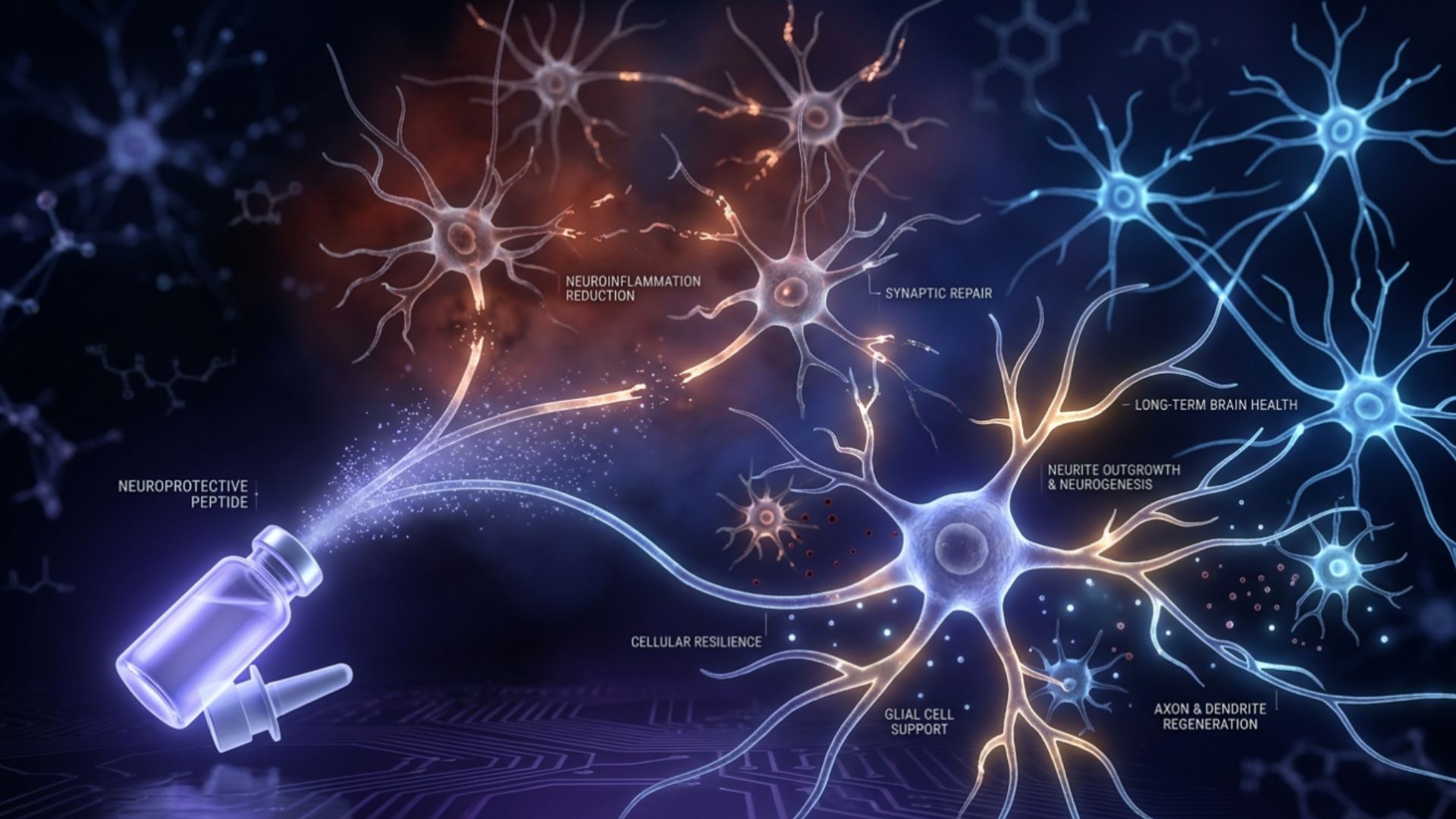
Beyond the short-term effect on concentration, there is another side to the topic – peptides for brain repair and neuroprotection, that is, working on the structural health and resilience of the brain in the long term. This is precisely where peptides for brain health differ from “fast-acting” nootropics.
Cerebrolysin (a complex of neuropeptides and amino acids) has been studied for neuroprotection, recovery from stroke and traumatic brain injury, and cognitive support in neurodegenerative conditions. Research indicates potential support for neuronal survival and regeneration. The effect of Semax on BDNF and NGF also has a neuroprotective aspect, supporting the brain’s ability to maintain and restore neural connections. P21 and several other experimental peptides are being studied in the context of neurogenesis (the formation of new neurons).
This is significant for the aging brain: age-related cognitive decline is associated with accumulated neuronal damage, reduced plasticity, and diminished growth-factor support. This is precisely what brain-regenerative peptides target.
But it is worth remembering: the most compelling data on neuroprotection and repair have been obtained in clinical studies of specific conditions (stroke, traumatic brain injury, dementia), rather than in studies of healthy brain optimization. Peptides for brain repair show real potential in this area. In contrast, their use for general brain “longevity” in healthy people is still more of a logical assumption than a fact.
Dosing and Delivery – How Cognitive Peptides Are Taken
From a practical standpoint, most nootropic peptides are administered intranasally or subcutaneously, though modern technologies have made it possible to achieve results with tablet formulations as well. Nasal sprays have become the standard for Semax and Selank: a non-injectable, fast-acting method that partially relies on direct access to the brain via the olfactory pathway.
According to descriptions, the effects of the nasal forms of Semax and Selank manifest fairly quickly, but cumulative results build up with regular use over a specific period (with breaks). In clinical protocols, Cerebrolysin is administered via injection. A separate practical consideration is storage: nasal sprays containing peptides must be refrigerated after opening. As for quality, the product’s source and the availability of verified analysis certificates from an independent laboratory remain key criteria.
Best Nootropic Peptides for Your Goals – Choosing the Right One
When choosing among the best nootropic peptides, it makes sense to base your decision on a specific goal rather than on the “most potent” option:
- For focus, productivity, and mental endurance, Semax is considered the most reliable option without the side effects of stimulants.
- For reducing anxiety and stabilizing mood, Selank calms without sedation and often improves thinking by eliminating anxious “noise.”
- For a combination of focus and calm, the Semax/Selank combo is the most popular combination in this category.
- For neuroprotection and brain recovery, consider Cerebrolysin (clinical, injectable form) or Semax, given its effects on growth factors.
- For experimental use, Dihexa and P21, for which there is significantly less human data and a higher degree of uncertainty.
Most people interested in peptides for cognitive function start with Semax, add Selank for severe anxiety, and consider neuroprotective options as part of long-term brain care. But remember that self-medication leads to uncontrollable consequences. Therefore, before searching for and using the best peptides for brain function, you must consult a specialist who can evaluate your individual situation.
Are Cognitive Peptides Right for You? Practical Takeaways
To put it all together, cognitive peptides are most often relevant for:
- Knowledge workers and students who value sustained concentration without the side effects of stimulants.
- People whose productivity suffers due to anxiety.
- Those recovering from mental burnout.
- Older adults who are concerned about brain health and age-related cognitive decline.
- Those for whom classic nootropics have proven insufficient or poorly tolerated.
On the other hand, this approach is not suitable for those who are fundamentally opposed to nasal sprays or injections; those expecting an immediate effect; people with serious psychiatric diagnoses or taking psychiatric medications without medical supervision; as well as pregnant and breastfeeding women.
The sensible approach is to consult a doctor and only then start with a single compound, assess your body’s reaction (all of this should take place under a doctor’s supervision), and only then consider combining different compounds. And perhaps most importantly: nootropic peptides enhance the function of a well-rested, well-nourished brain, but they do not compensate for chronic sleep deprivation, poor nutrition, or unmanaged stress.
Important. All peptides mentioned in this text are provided for informational purposes only. The final decision regarding their use must be made by a qualified specialist, taking into account your individual health status, medical history, and current medications. Do not self-medicate to avoid making things worse.