
Anyone who trains seriously and regularly will sooner or later face the same problem: progress depends not on the amount of effort, but on the speed of recovery. The higher the intensity and the greater the accumulated fatigue, the more difficult recovery becomes. Insufficient recovery manifests as stagnant performance metrics, chronic fatigue, lingering pain, and injuries that just won’t go away.
That is precisely why the topic of peptides for recovery has moved beyond the narrow circles of biohackers in recent years to become a broader discussion among athletes and fitness enthusiasts.
But how do these compounds work at the physiological level? Which peptides are best suited, and will they actually produce results? Let’s find out.
All substances mentioned in this article are classified as experimental. This material is for informational purposes only, and the decision to use peptides should be based solely on the recommendations of your healthcare provider.
How Recovery Peptides Work – The Science of Faster Healing
To understand why recovery peptides have taken center stage, it’s worth examining how they differ from conventional supplements. Supplements typically function as “building blocks,” providing our bodies with the raw materials needed for recovery. But peptides work a little differently: they don’t add anything new; rather, they signal what’s already in your body to function properly.
For example, compounds like BPC-157 are being studied for their ability to stimulate angiogenesis (the formation of new blood vessels), which, in theory, improves the delivery of oxygen and nutrients to damaged tissues and is associated with reduced local inflammation. In studies, these effects are examined in relation to muscles, tendons, ligaments, and connective tissue.
Another group consists of hormonal secretagogues, such as CJC-1295 and ipamorelin. Their mechanism involves amplifying natural growth hormone pulses, which are particularly active during deep sleep. Compounds like TB-500 are being studied in the context of cell migration to the site of injury and tissue regeneration.
Together, these mechanisms cover various aspects of recovery: inflammation, blood supply, hormonal signals, and cellular regeneration. It is important to understand that peptides do not replace the basic principles of recovery, such as sleep, nutrition, and training regimen. Peptides enhance what is already working.
Best Peptides for Muscle Recovery – BPC-157 and TB-500
When it comes to the best peptides for muscle recovery, the combination of BPC-157 and TB-500 is mentioned first. These are the two compounds most frequently discussed in the context of recovery from workouts and injuries.
BPC-157 is considered a compound capable of supporting soft tissue recovery – including muscle microtears, tendon, and ligament injuries – as well as a factor that reduces local inflammation. TB-500 is described as a compound with a more systemic effect; it is associated with tissue regeneration and cell migration, which is particularly relevant for deeper or more extensive injuries.
The rationale for combining them is based on different but complementary mechanisms:
- One creates a favorable “environment” for healing through its vasodilatory and anti-inflammatory effects.
- The other supports cellular tissue remodeling.
According to the descriptions, the results typically include reduced muscle soreness after exercise, faster recovery between workouts, and noticeable improvements in “chronic” problem areas.
Peptides for Injury Recovery – Targeting Specific Damage
A separate category of application is peptides for injury recovery, that is, situations where training is interrupted due to a specific issue: strains, tendon problems, joint flare-ups, or recovery after surgery.
In this context, BPC-157 is most often cited as the “foundation”: animal studies describe accelerated healing of tendons, ligaments, and muscle tissue. TB-500 is viewed as a compound with a more systemic effect, supporting tissue repair throughout the body.
It’s important to be clear here: even in theory, while accelerating healing, peptide compounds do not replace proper rehabilitation. Combining them with adequate rest, a gradual return to activity, and work with a physical therapist or rehabilitation specialist yields significantly more sustainable results than any compound alone.
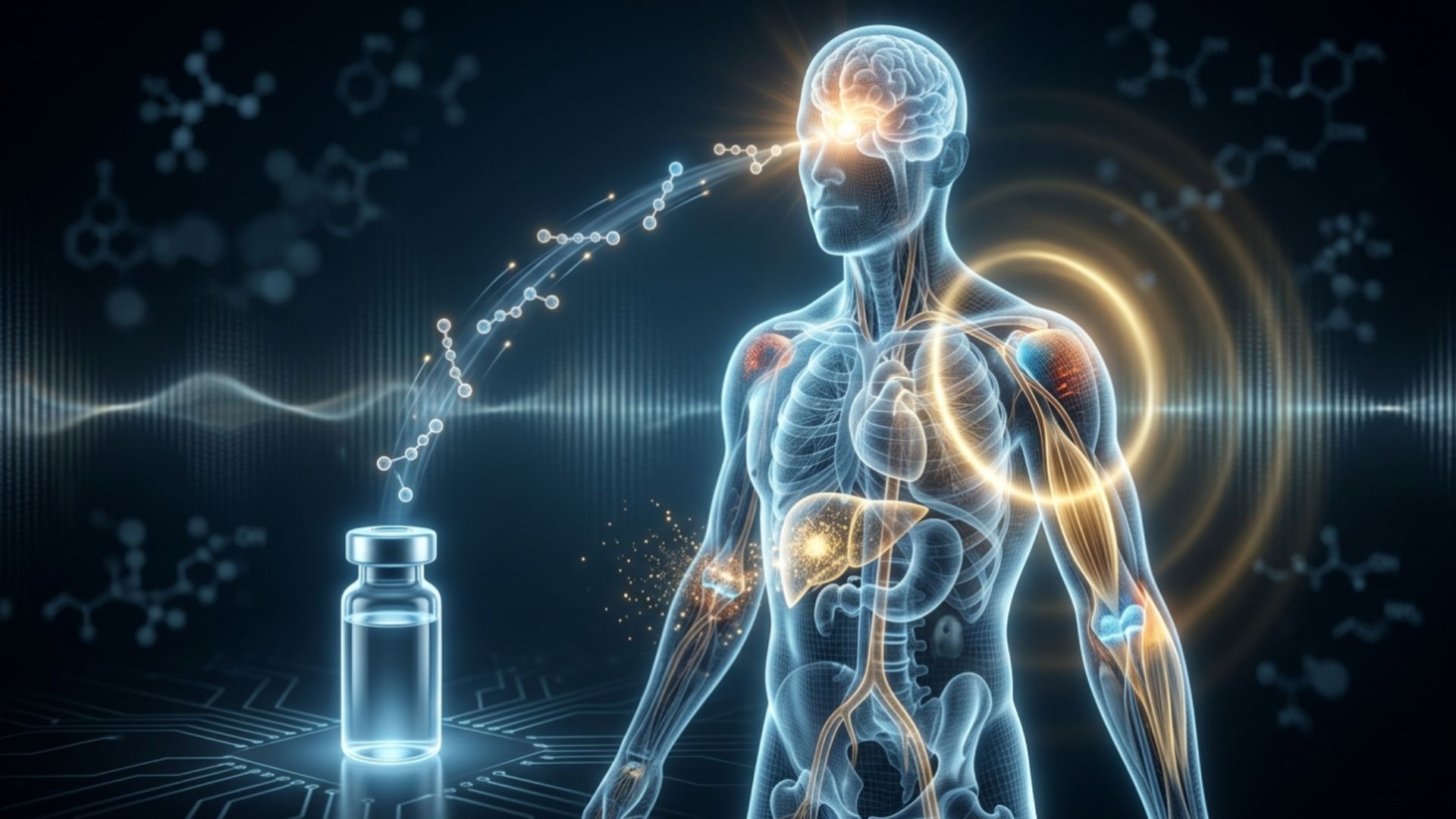
Peptides for Recovery and Muscle Growth – GH Secretagogues
The second major category is peptides for recovery and muscle growth, with a focus on hormonal secretagogues: CJC-1295, ipamorelin, sermorelin, and tesamorelin.
Unlike “healing” peptides, which work directly on damaged tissue, secretagogues influence the natural production of growth hormone. This process affects both recovery and the development of muscle tissue.
The combination of CJC-1295 and ipamorelin is most frequently discussed: it is believed that one component prolongs the growth hormone release pulse, while the other enhances its amplitude. Together, they produce a more pronounced effect than when used separately. From a recovery perspective, the described effects include:
- Deeper and higher-quality sleep (a significant portion of recovery processes occurs during sleep)
- Faster recovery between workouts
- Gradual changes in body composition
The rationale behind peptides for improved muscle and recovery typically revolves around situations where progress and recovery have plateaued, when natural growth hormone production declines with age, or when an individual wants to maintain a high training volume without significant “setbacks.”
Building a Recovery Stack – How the Compounds Work Together
When people talk about the best peptides for muscle growth and recovery, they usually don’t mean a single compound, but a well-designed combination of several categories, each serving a specific purpose. A recovery protocol is typically divided into three “layers”:
- Healing peptides (BPC-157, TB-500) support tissue repair and reduce inflammation.
- Hormone secretagogues (CJC-1295/ipamorelin) support sleep quality and the hormonal “environment” for recovery.
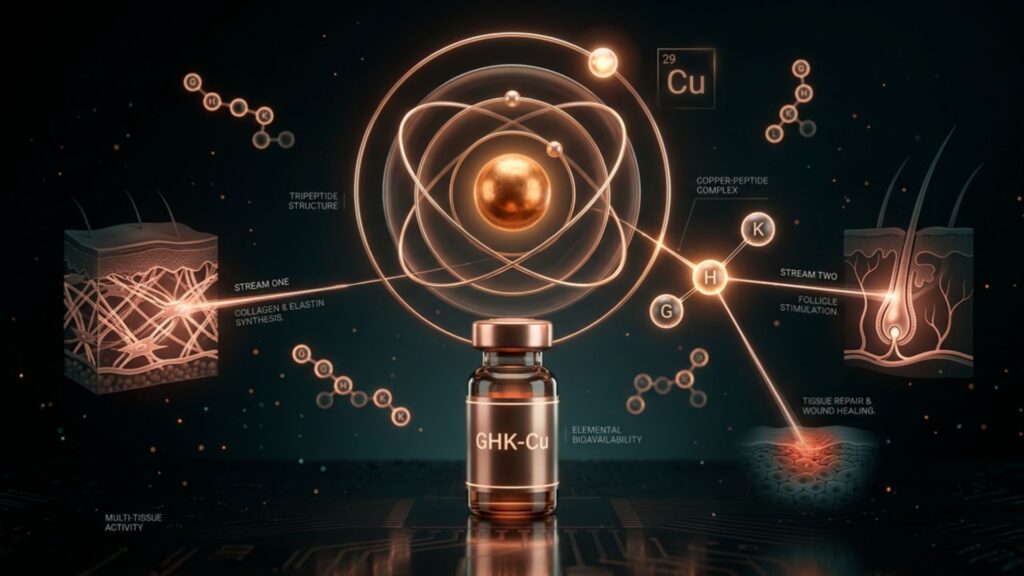
- GHK-Cu is a compound associated with the repair of connective tissue and skin during periods of intense training.
The combination of BPC-157 and TB-500 is sometimes referred to in the community as the “basic” recovery stack, to which CJC-1295/ipamorelin is added as needed (for example, when healing alone is not sufficient and overall recovery support is important).
The timing of administration also varies: hormonal secretagogues are more often taken in the evening to enhance the natural nighttime growth hormone surge. Healing compounds can be taken throughout the day. Any such protocol involves a course of a specific duration followed by a break, and these parameters are also determined individually and only with a specialist.
The main idea is not to offer a “one-size-fits-all formula,” but to demonstrate that, based on research findings and user experience, a combination of compounds works more effectively than a single component simply because it addresses different stages of the recovery process.
Realistic Timelines – When Recovery Peptides Actually Kick In
One of the most important points, which is rarely discussed, is timing. Peptides for recovery operate on biological timelines that cannot be “accelerated” by sheer willpower.
Changes related to sleep and the sensation of recovery when using hormone secretagogues may, according to reports, become apparent as early as the first few weeks. With healing peptides, reduced soreness and faster recovery between workouts are usually only felt after a few weeks. The healing of specific injuries varies by tissue type: muscle strains heal faster, whereas tendons and ligaments with poorer blood supply require significantly more time. Changes in body composition induced by secretagogues are usually described as gradual over several months.
And remember, the most common mistake is expecting an instant effect. No supplement will give you instant results. Peptides primarily enhance natural processes that, even without intervention, take weeks or even months. Therefore, don’t evaluate a single day; rather, evaluate the overall trend: sleep quality, soreness, readiness for training, and progress.
Safety, Sport Regulations, and What Athletes Must Know
This section is probably the most important in the entire article, because without it, any discussion of recovery peptides would be incomplete and potentially dangerous.
In terms of general tolerability, the descriptions most often mention relatively mild side effects:
- Irritation at the injection site
- Temporary fatigue
- Fluid retention (especially with hormonal secretagogues)
- Occasional headache
TB-500 deserves special mention: due to a mechanism related to cell migration, such compounds are strictly unsuitable for people with active cancer or a recent history of cancer. Hormonal secretagogues can affect insulin sensitivity and cause symptoms similar to carpal tunnel syndrome.
We want to highlight Sport Regulations as a separate point. Most of the peptides discussed are included on the lists of prohibited substances by WADA, USADA, and most organizations that conduct doping testing. This applies to hormonal secretagogues, TB-500, and BPC-157, which fall under the category of “unapproved substances.” For any athlete competing in a federation that conducts testing (Olympic, collegiate, professional, or amateur with testing), the use of such compounds carries a direct risk of sanctions.

Is a Recovery Peptide Protocol Right for You? Practical Guidance
To wrap up, let’s try to distill everything into a simple logic of “who it makes sense for and who it doesn’t,” without specific regimens or recommendations.
The topic of peptides for recovery is most often discussed by people who:
- Feel that their progress is limited specifically by recovery, rather than by their training efforts.
- Are 30+ years old and notice that recovery and sleep have gotten worse.
- Have “chronic” soft tissue issues that won’t go away.
- Train at high volume in a context unrelated to drug-tested sport.
On the other hand, this topic is clearly not suitable for athletes competing in tested federations, beginners without established foundational habits, people with a history of cancer, and those who view supplements as a way to “compensate” for what should be addressed through sleep, nutrition, and routine.
To summarize the main point: discussing muscle recovery peptides only makes sense when the foundational factors (sleep, nutrition, and training programming) are already in place. In this case, according to the descriptions, such compounds act as an “amplifier” for a system that is already functioning. If the foundation is not established, no compounds can replace it.
Important warning! The content of this article is for informational and educational purposes only. It is not medical advice, a usage guide, or a recommendation to purchase or use any substances. Any decisions related to health, recovery, or the use of any compounds, as well as questions regarding an athlete’s status within tested federations, should be discussed with a physician, a sports medicine specialist, and/or an anti-doping organization.