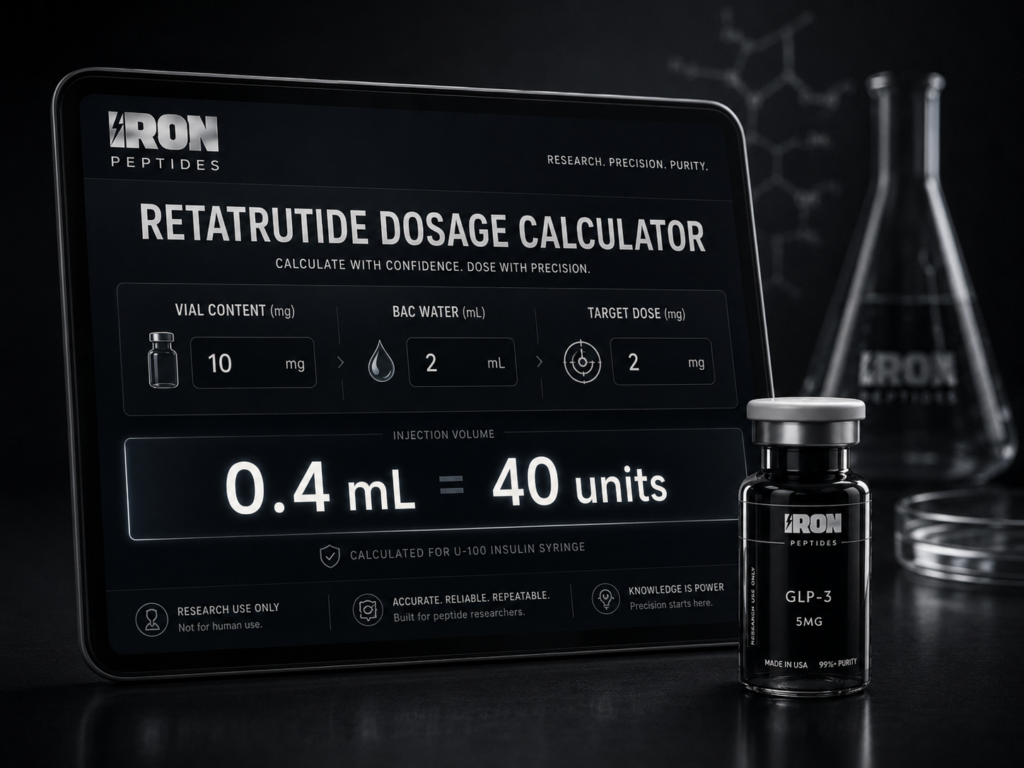
Compounds such as GLP-3 (retatrutide) are commonly studied for body-composition research.
Search for peptides online before and after, and you’ll find two things: dramatic transformation photos with almost no context, and a lot of people in forums trying to figure out whether any of it is real. The answer is somewhere in the middle, and understanding where is more useful than another side-by-side photo from someone whose lighting, hydration, and compound stack you know nothing about.
This guide is a realistic breakdown. What do peptide results actually look like across different goals – skin, muscle, recovery, fat loss? What timeline should you actually expect? And how do you evaluate your own progress without comparing yourself to content that was designed to sell something?
What “Before and After Peptides” Photos Don’t Tell You
Most before and after peptides content online shares a few common problems. Different lighting and posing between photos. One photo was taken after a pump, the other at rest. Dramatic body composition changes that conveniently don’t mention the anabolic stack that was running alongside the peptide. Transformations credited to ipamorelin required 18 months of training, a dietary overhaul, and three other compounds.
Real peptide transformation looks different from this. The changes are real – measurable in body composition scans, blood markers, skin elasticity tests, recovery time, sleep architecture, but they don’t read as dramatic in a single photo. Peptides optimize processes the body already runs. They amplify GH pulses, accelerate collagen synthesis, and support tissue repair. They don’t build muscle the way anabolic steroids do or strip fat the way a significant caloric deficit does. What they do is make the body’s own systems perform closer to their potential.
The recalibration most people need: if you’re 45 and researching peptides for joint relief and better recovery, comparing your expected trajectory to a 24-year-old’s “ipamorelin before and after” bodybuilding photo is starting from the wrong place. Peptide results are personal, cumulative, and measured in months, not viral in a week.
How Long Does It Take for Peptides to Work? A Realistic Timeline
How long does it take for peptides to work is the question behind almost every beginner forum post, and the honest answer is: it depends entirely on what you’re measuring.
The general framework breaks down by system:
- Subjective changes (sleep depth, energy, recovery feel) – typically appear within 1-3 weeks for GH-class compounds. This is often the first signal researchers notice, and it’s mechanistically sound: peptides like CJC-1295 and ipamorelin amplify the overnight GH pulse during slow-wave sleep, and improved sleep quality is the most immediate downstream effect.
- Physical changes (skin texture, body composition shifts, reduced soreness) – need 8-12 weeks to become measurable. Collagen synthesis happens on a biological schedule that can’t be compressed. Proksch et al.’s 12-week clinical study documented significant improvements in skin elasticity and dermal density at the 12-week mark in subjects using collagen peptides – reflecting the actual biological timeline for structural tissue change.
- Structural changes (joint repair, deep tissue healing, significant improvements in hair density) – typically take 3-6 months for most people.
How long for peptides to work also depends heavily on protocol quality. Sub-therapeutic dosing produces sub-therapeutic timelines. A 12-week cycle at the wrong dose tells you very little about what the compound is capable of.
How Long for Peptides to Work for Skin Specifically
Skin cells turn over approximately every 28 days in younger adults and progressively more slowly with age. That biology governs the timeline for any skin-focused peptide protocol.
How long for peptides to work for skin follows a predictable progression with compounds like GHK-Cu, our GLOW blend, and copper peptide formulations:
- Weeks 2-4: hydration and texture improvements. Skin feels different before it looks different. Reduced sensitivity and a subtle change in surface quality are the first signals.
- Weeks 6-8: visible changes begin. Fine-line reduction around the eyes and mouth, a more even tone, and improved luminosity. This is when peptides skin before and after comparisons start to show something measurable in photos – if the photos are taken under consistent conditions (same lighting, same time of day, no makeup, no flash).
- Weeks 10-14: structural changes accumulate. Firmness, scar fading, improved skin thickness, and, for protocols targeting hair, initial density improvements at the hairline.
Injectable GHK-Cu reaches these milestones faster than topical-only approaches. Topical before and after peptides skin results are real but slower – the penetration depth limits how much of the active compound reaches the dermal layer where collagen synthesis happens.
Peptides Before and After for Bodybuilding and Muscle Growth
This is the most searched and most misrepresented category in the peptide space.
Peptides before and after bodybuilding content is dominated by photos that combine GH peptides with training, diet, and often anabolic compounds – then credit the peptide alone for the result. It creates an impossible benchmark and a misleading picture of what these compounds actually do.
Peptides for muscle growth before and after results from GH-class compounds like CJC-1295, ipamorelin, and tesamorelin look like this on a realistic timeline:
- Weeks 1-2: deeper sleep, improved recovery feel.
- Weeks 3-4: slightly faster return to baseline after hard sessions. Less accumulated soreness.
- Weeks 6-8: subtle body composition shifts – visceral fat reduction begins, muscles appear slightly fuller from improved protein synthesis and reduced inflammatory retention.
- Weeks 10-12: continued slow improvement in composition, skin, and recovery capacity.
Peptides for muscle growth before and after timelines don’t resemble anabolic steroid timelines. Anabolics force rapid change. GH peptides optimize. A 12-week CJC-1295/ipamorelin cycle produces improvements that are clearly measurable in DEXA scan data but subtle in mirror photos, and that’s actually the point. The changes are durable, built on the body’s own machinery rather than imposed from the outside.
HGH Peptides Before and After – What Growth Hormone Optimization Actually Looks Like
HGH peptides before and after results deserve their own honest treatment because this category (CJC-1295, ipamorelin, tesamorelin, sermorelin) gets conflated with synthetic HGH in a lot of content, and the trajectories are different.
Synthetic HGH bypasses the pituitary and delivers exogenous hormone directly. GH secretagogue peptides work by stimulating the pituitary to release more of the user’s own GH in natural pulses. Teichman et al.’s human study documented sustained GH elevation from CJC-1295, but through pituitary amplification, not replacement. The pulsatile mechanism produces a different physiological pattern than constant exogenous HGH, and the HGH peptide trajectories before and after reflect that.
Rudman et al.’s landmark study showed significant improvements in lean body mass, bone density, and skin thickness in men over 60 treated with synthetic GH over 6 months. That six-month timeline is the relevant benchmark for structural body composition change from GH optimization – whether through injectable HGH or peptide-mediated secretagogues. Anyone expecting a dramatic visible change in 30 days is working from the wrong timeline.
HGH peptides before and after commonly reported user sequence: facial changes before body composition changes (reduced puffiness, improved skin quality), then gradual midsection changes, then lean tissue improvements in users who train consistently. Side effects worth knowing: water retention in early weeks, occasional tingling in extremities at higher doses, and minor blood sugar shifts with extended use.
Peptide Transformation Stories – Separating Real Results From Marketing
Red flags in peptide transformation content: photos taken with different lighting sources, posing adjustments that dramatically change apparent body composition, 30-day claims for results that require 12-16 weeks biologically, and transformations that don’t disclose full compound stacks.
What real evidence looks like: standardized weekly photos in identical conditions, body composition scans before and after a complete cycle, sleep and recovery metrics tracked consistently, and blood panel changes. None of this is viral content. All of it is meaningful.
Before starting any protocol, document your baseline. Front, side, and back photos in neutral natural light. Measurements. Sleep quality score. Recovery baseline. Your own before-and-after data eliminates the comparison problem – you’re measuring against yourself, on a timeline that reflects your biology, not someone else’s photoshoot.
Peptides Skin Before and After – Realistic Visual Changes by Week
A practical week-by-week guide for skin-focused peptide protocols – GHK-Cu injectable, our GLOW blend, KLOW blend, or copper peptide topicals:
- Weeks 1-2: Hydration and subtle texture change. Skin feels different before it photographs differently. Some reduction in redness or sensitivity.
- Weeks 3-4: Texture improvement becomes visible at close range. Pores appear slightly tighter. Makeup application improves.
- Weeks 6-8: Fine line reduction, particularly around eyes and mouth. More even skin tone. Post-inflammatory hyperpigmentation begins fading.
- Weeks 10-14: Firmness improvements. Scar texture change. For hair protocols, early density changes occur at the hairline.
Peptides before and after skin tracking are only useful if the photos are standardized. Same time of day. Same lighting source (natural window light, no flash). Makeup-free. Without that consistency, the photos aren’t measuring the peptide – they’re measuring the photography conditions. We say this not to complicate things, but because self-tracking done right removes the need to compare against anyone else’s results.
Setting Realistic Expectations: What Peptide Results Should Actually Look Like
Four things worth internalizing before any peptide protocol:
- First: peptides are optimizers, not transformers. They work within the limits of your training, nutrition, sleep, and genetics. They amplify what the body can already do – they don’t override it.
- Second: timelines matter more than dose. More milligrams don’t compress the biological schedule for collagen synthesis or GH-driven changes in body composition. Proper dosing over the right cycle length matters more than going higher.
- Third: documenting your own baseline before starting is the most underrated step in any protocol. It turns a 12-week cycle into a controlled experiment rather than a feeling.
- Fourth: peptides before and after results are quiet and cumulative. The sleep improvement in week two, the faster recovery in week five, the skin texture change in week eight – none of these make for shareable content. All of them are real, measurable, and durable in ways that dramatic 30-day photos rarely are.
Our product pages include the COAs, the compound profiles. The research is there to verify. What we can’t do is compress biology – but when the protocol is right, and the timeline is realistic, before and after peptides results consistently reflect what the published science describes.