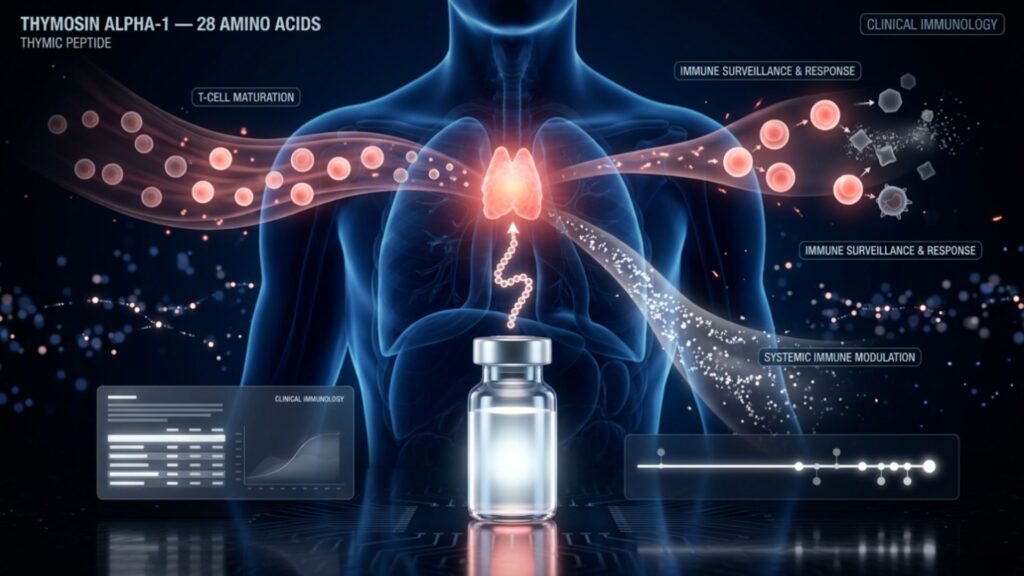
The search query “how to calculate peptide dosage” is among the most common for those just beginning to explore peptides. And this query is completely understandable, because while some peptides are available in ready-to-use forms such as capsules or sprays, others need to be reconstituted with BAC water.
This article explains what these concepts mean and why calculating peptide dosages isn’t something an article or an online calculator can solve. We won’t provide specific numbers, formulas, or practical examples. No, we’re not hiding this information; it’s just that such decisions must be made on an individual basis. And such a decision must first and foremost be confirmed by a doctor, who can calculate the dosage specifically for your body.
Important. The compounds mentioned in this article are exclusively research substances. Our material is for informational purposes only. A specialist prescribes the application and dosage on an individual basis.
What People Mean by a “Peptide Dosage Calculator”
When someone searches for a peptide dosage calculator, they usually want a simple tool: enter a few parameters (body weight, substance concentration, vial volume) and get a ready-made result. The logic is clear: math seems objective, a calculator seems neutral, and this creates a sense of security.
The problem is that a peptide dosage calculator is not actually a mathematical problem, but a medical one, with mathematics merely serving as a supporting tool. A correct calculation depends on the specific substance used and the clinical context, and it takes into account the individual’s characteristics, health status, potential interactions with other medications, and the compound’s regulatory status in that country.
The main purpose of such calculators is not, first and foremost, to determine an exact dosage, but to provide a rough idea of how much of what you need. For example, suppose you are researching a weight-loss compound. To do this, you need the substance itself and an understanding of how much water (BAC) to add. Online calculators help you approximate these figures.
Units vs. mg: Understanding the Terminology
When it comes to a peptide calculator in units, it’s important to understand what these terms actually mean. What exactly do the units of measurement used represent?
“mg” (milligrams) refers to mass. In the context of peptides, it describes how much of the substance is contained in a vial or a single dose, similar to how a tablet’s mass indicates the amount of active ingredient it contains.
“Units” (IU, international units) are a measure of biological activity. They are used when it is not just the mass that matters, but also the substance’s potency. Different compounds can have different ratios between mass and activity, so units and milligrams are not simply different ways of referring to the same thing.
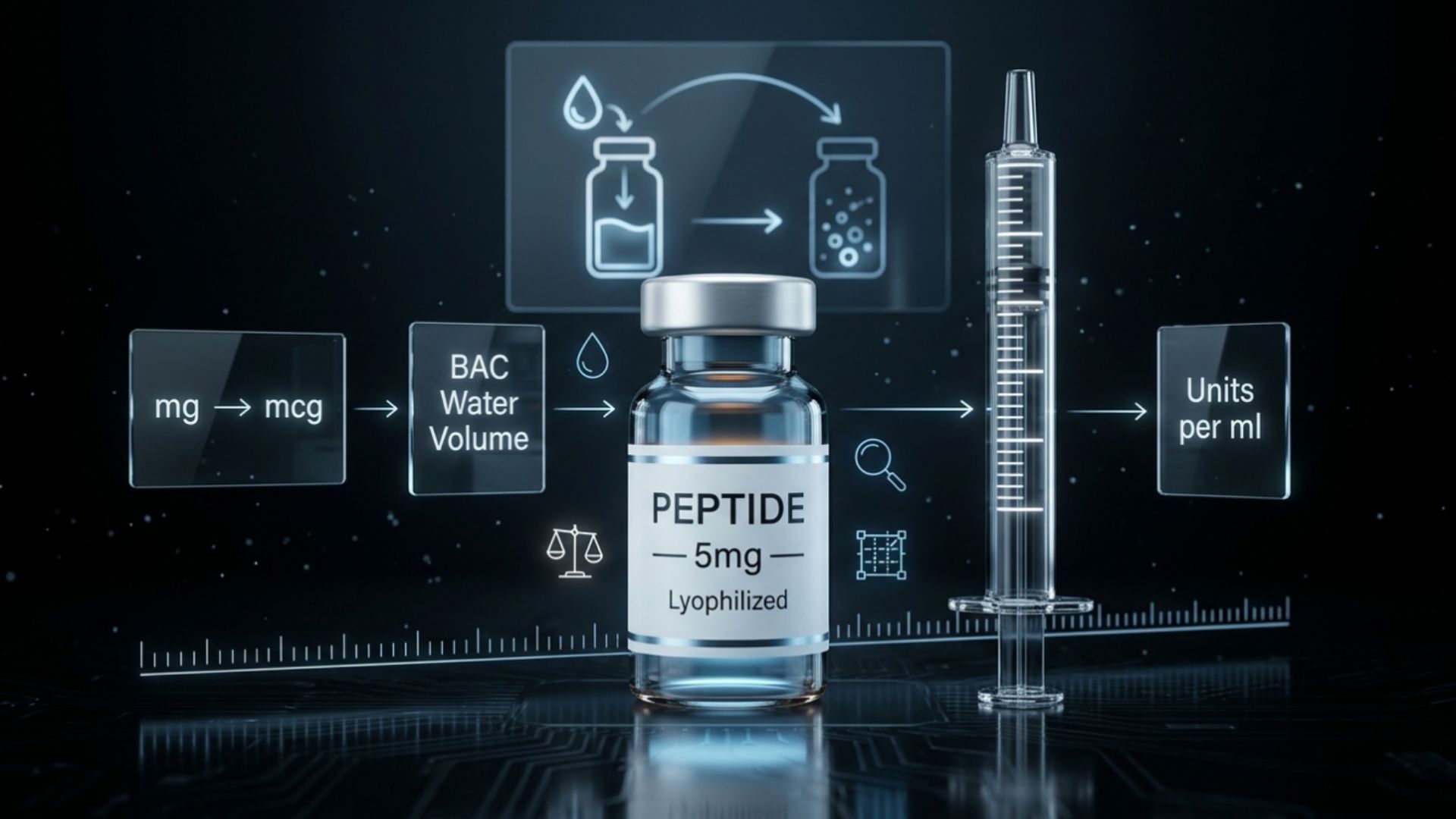
In peptide work, a third “unit” – the graduations on a syringe (such as an insulin syringe) – is also frequently used. This is precisely where the three systems (substance mass, solution volume, and syringe graduations) intersect and require a clear understanding of their relationships. This is the point where an error in any of these three links can change the final figure and have unpleasant consequences.
An additional complication is that different manufacturers may supply the same compound with varying concentrations in the vial. This means that even if you have the “recommended dose” on hand, the method for drawing it into a syringe will be fundamentally different depending on the specific product. Without a clear understanding of the entire chain (mass → volume → concentration → syringe graduations), any number remains simply a number with no practical meaning.
What “Reconstitution” Refers To
The term “reconstitution” appears in most search queries, such as “peptide dosage calculator (reconstitution)” and “peptide reconstitution and dosage calculator,” and it’s important to understand its meaning before moving on.
Most peptides are supplied as a lyophilized powder. Essentially, this is the peptide in a dried form, which ensures stability during storage. Before use, this powder is mixed with a solvent, forming a liquid solution. This process is called reconstitution.
Why this is important in the context of calculations: the concentration of the final solution (how much of the substance is contained in each milliliter of liquid) directly determines how much volume needs to be drawn into a syringe for any given dose. Different volumes of solvent yield different concentrations, and this is precisely where the need for precise calculations arises, which goes beyond the scope of an informational article and requires laboratory-grade precision and an understanding of the specific compound.
Syringes and “Syringe Math”: Why It’s Not DIY
A separate category of search queries relates to the peptide syringe calculator – that is, calculating exactly how much liquid to draw into a syringe for a specific dose. We want to highlight this section in particular because, if you are not a healthcare professional, you need to understand why this is not “just math.”
A peptide syringe in this context most often refers to an insulin syringe – small, with a fine needle and graduations in units (usually 100 divisions). Drawing up the required amount into such a syringe requires an understanding of:
- The concentration of the substance in the solution after reconstitution
- How the syringe markings correspond to volume in milliliters
- How the volume corresponds to the desired amount of the substance in mg or units
Each of these steps depends on the previous one, and an error at any stage results in an incorrect final volume, that is the wrong dose. For injectable compounds, this is a real risk. That is precisely why working with a syringe when using investigational compounds is a clinical procedure requiring special training.
Named-Compound Calculator Searches (Tirzepatide, Retatrutide, BPC-157)
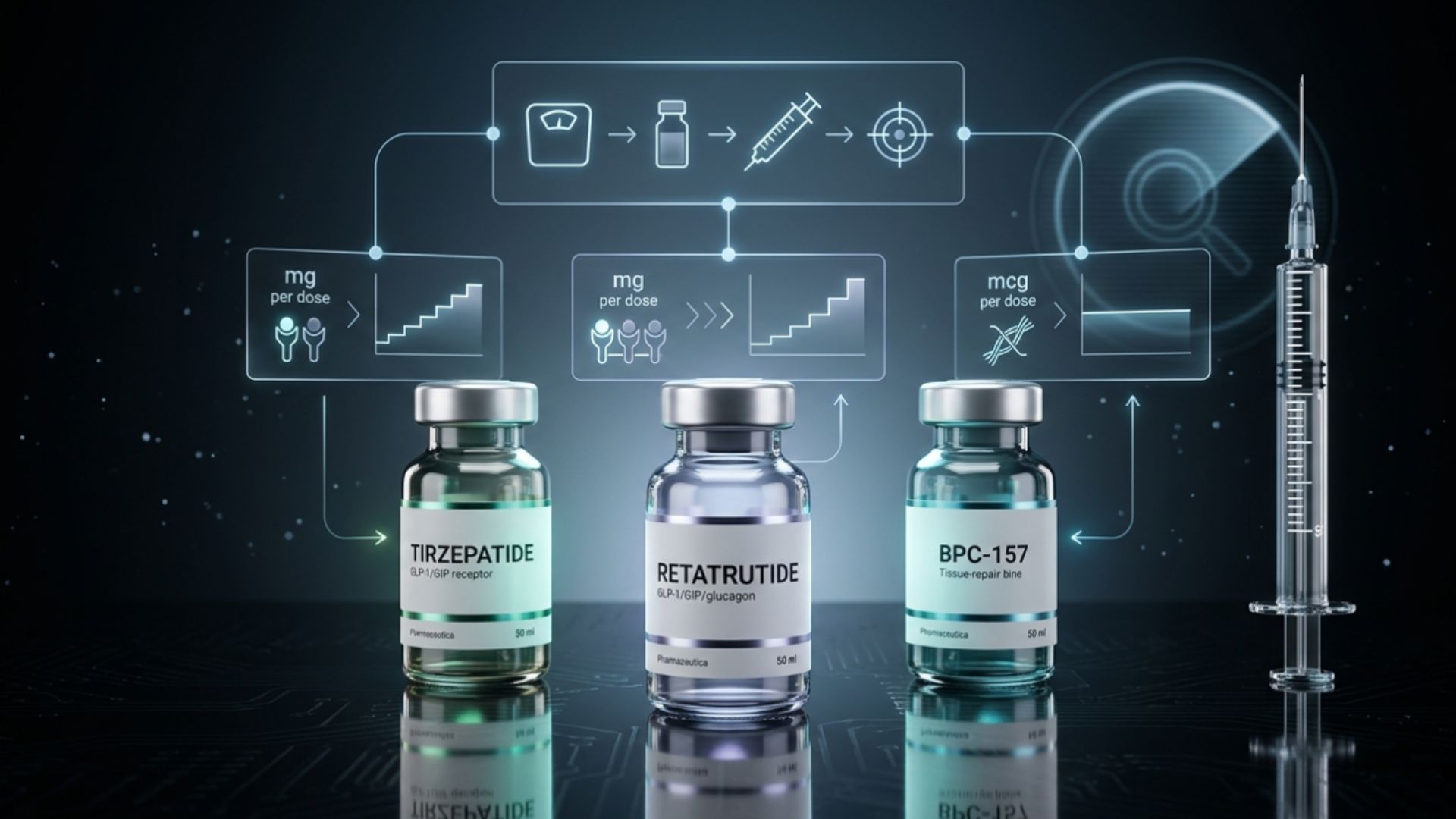
A significant portion of search queries relates to specific compounds: peptide calculator for tirzepatide dosage, tirzepatide peptide dosage calculator, retatrutide peptide dosage calculator, BPC-157 peptide dosage calculator – all of these are attempts to find a calculation tool specific to a particular substance.
Here, it is important to understand the fundamental difference between these groups.
Tirzepatide and retatrutide are pharmaceutical drugs that are either approved or currently in clinical trials. Tirzepatide has been approved as a prescription drug in several countries, meaning its administration requires a doctor’s involvement by definition; that is, the question of dosage is determined during a medical consultation, not by searching for an online calculator. Clinical trials for retatrutide are still ongoing, which means there is even greater uncertainty regarding dosing.
BPC-157 is classified as an investigational compound with no approved human dosage. Everything is highly individualized, and any numbers mentioned in discussions are more likely to reflect individual self-reported use under medical supervision. These compounds continue to be discussed because they are actively being studied. But it is still too early to talk about exact dosages.
For any of these compounds, the dosage should be determined with a doctor or as part of a clinical protocol.
“Blend” and “GLOW” Calculator Searches
Peptide blend dosage calculator and GLOW peptide dosage calculator represent a separate category of search queries related to pre-mixed formulations that combine several compounds in a single vial.
These queries appear more frequently because their logic is more complex. With a single-component compound, dosage estimation is more straightforward. But if several components are mixed in a single vial, “how much to use” depends on the entire combination and the proportions between the components. This makes the query even more complex.
Safety, Legal Status, and Why a Professional Is Required
All of the above leads to one key conclusion, which is important to state clearly. The question of peptide dosing is a medical issue, not a mathematical one, and the difference between the two is fundamental.
From a regulatory standpoint, some of the compounds people search for in combination with the word “calculator” are registered prescription drugs. But this means that, by definition, their administration requires a doctor’s involvement – it is not an optional recommendation. Another group consists of investigational compounds without approved human doses; in other words, there is no “correct number” that a calculator could provide for them.
From a safety perspective, data on the long-term safety of most investigational peptides in humans is extremely limited. This is no reason to panic, but it is a reason to be honest: using any of these compounds is a decision that must be made with a full understanding of a person’s current health status, medical history, medications, and the risks of interactions.
If you’re facing a real question about the dosage of a specific compound, the only correct next step is to consult a specialist. Not because the information is “classified,” but because the correct answer exists only in the context of a specific individual.
Key Takeaways and Common Questions
Let’s summarize this in the form of short answers to the questions most commonly behind search queries on this topic.
Is there a reliable online peptide dosage calculator? Yes, but none of them can account for individual medical factors, on which the calculation’s accuracy depends. Understanding the terminology is helpful, but relying on a calculator instead of a specialist is not an option.
What should I do if I see different numbers in different sources for the same compound? This is to be expected: for most research peptides, there are no universally accepted standards, and what you find in discussions is user experience or extrapolation from preclinical data, not a medical standard. Only a doctor can determine the actual dosage based on your specific data.
Why bother understanding the units and terminology if I’m not going to do the calculations myself? Because understanding the terminology helps you better navigate the topic, ask your doctor the right questions, and evaluate information from various sources; not to replace the specialist, but to prepare for your conversation with them.
Why doesn’t the article include specific numbers? Because there are no universal values, only individual decisions made based on a specific person’s specific situation.
All peptides mentioned in this text are provided for informational purposes only. The final decision regarding their use, as well as any questions related to dosage, reconstitution, and route of administration, must be made by a qualified specialist, taking into account the individual’s health status, medical history, and current medications.