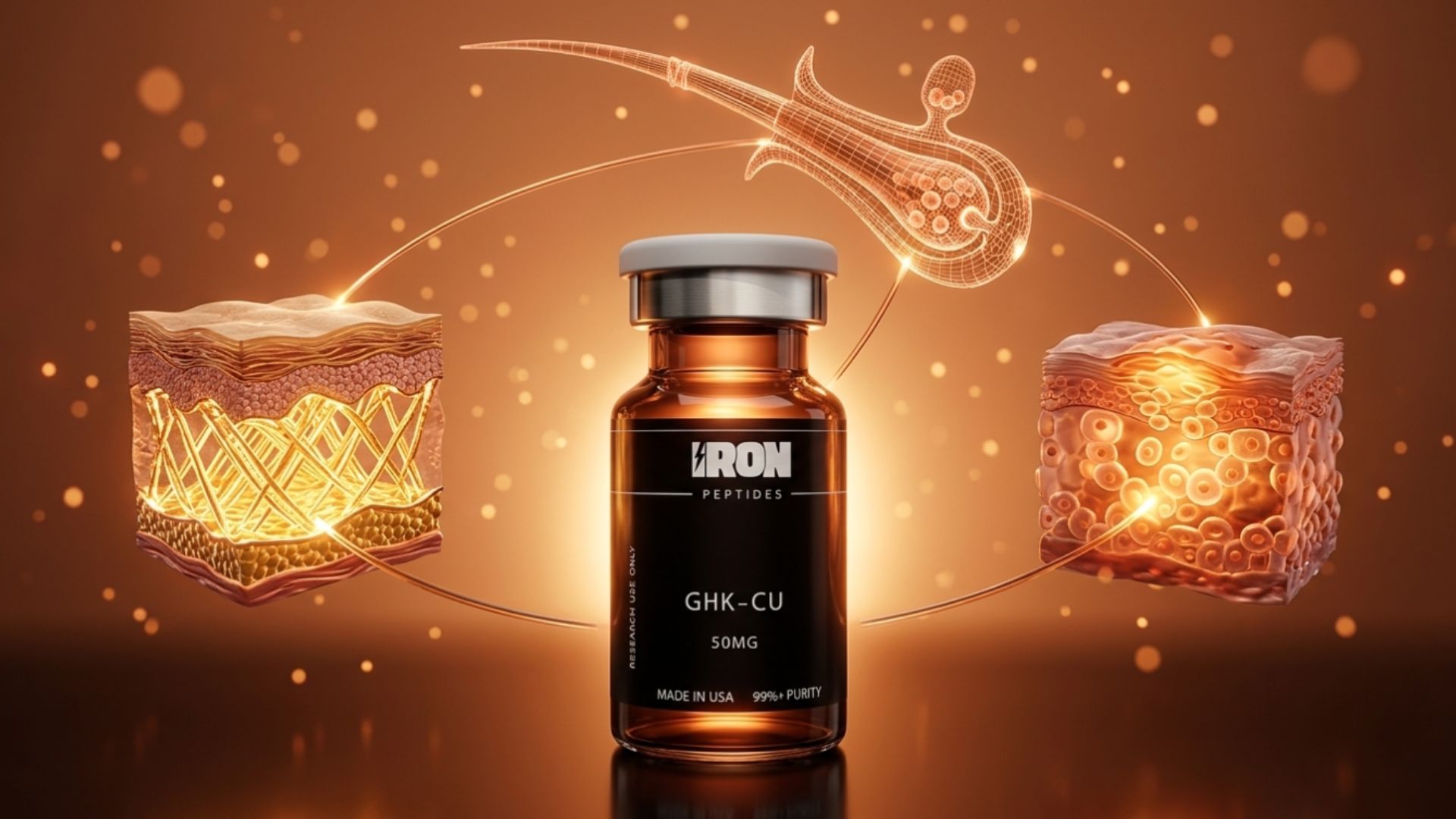
Most compounds in the longevity and regenerative space are newcomers – exciting early data, limited long-term research, a lot of community signals, and limited clinical confirmation. GHK Cu is the exception. This is a compound with over 50 years of published research, thousands of peer-reviewed papers, and a mechanism that’s been examined in detail at the genomic level, which most peptides will never receive.
It’s a naturally occurring tripeptide – three amino acids, glycyl-L-histidyl-L-lysine, bound to a copper ion – first isolated from human plasma in 1973. Young bodies produce it in abundance. By 60, plasma levels have dropped significantly, and the correlation with declining skin quality, slower wound healing, and reduced regenerative capacity isn’t coincidental. The copper peptide isn’t just a skincare ingredient. It’s a biological signal the body uses to coordinate repair, and understanding what it does explains why it’s showing up across skin, hair, wound healing, and even anti-aging longevity protocols.
What Is GHK-Cu? The Copper Peptide Explained
GHK-Cu stands for Glycyl-L-Histidyl-L-Lysine copper complex. The copper component isn’t incidental – it’s structurally central to the peptide’s biological activity. GHK without copper shows a measurable reduction in effect. The copper ion is what gives the GHK-Cu peptide its ability to interact with the cellular machinery responsible for collagen synthesis, gene expression, and antioxidant defense.
The research timeline on this compound is unusual by peptide standards. Loren Pickart first identified GHK in human plasma in 1973 and has been the primary investigator on its biology for five decades. Pickart’s 2008 review in the Journal of Biomaterials Science mapped the compound’s role in tissue remodeling – covering collagen synthesis, wound contraction, angiogenesis, and nervous system repair. This was the paper that established GHK copper peptide as a multi-system regenerative compound rather than a narrow cosmetic ingredient.
Production peaks in youth and falls sharply with age. This decline is part of why aged skin loses its structural integrity, why wounds heal more slowly in older individuals, and why regenerative capacity across multiple tissue types diminishes over time. The research case for supplementing GHK Cu peptide is built directly on this biology.
What Does GHK-Cu Do? The Mechanisms Behind the Magic
What does GHK Cu do at the cellular level is where the story gets genuinely remarkable.
Pickart & Margolina’s 2018 comprehensive review in Symmetry documented GHK-Cu’s activation of over 4,000 genes involved in tissue repair, skin remodeling, stem cell activity, and anti-inflammatory response. That’s not a typo – 4,000+ genes, including pathways for collagen and elastin synthesis, angiogenesis, antioxidant enzyme production, and wound healing cascade initiation. No other tripeptide has a documented genomic footprint anywhere close to this.
The specific mechanisms: GHK-Cu stimulates production of collagen, elastin, and glycosaminoglycans – the structural proteins that keep skin firm, joints cushioned, and connective tissue functional. It promotes angiogenesis, improving blood vessel density in damaged or aging tissue. It activates stem cell mobilization and dermal papilla cell activity, the mechanisms behind its hair growth applications. And it modulates inflammation without the immunosuppressive effects of corticosteroids – downregulating pro-inflammatory cytokines while leaving the underlying repair process intact.
Pickart, Vasquez-Soltero & Margolina’s 2015 paper in Cosmetics specifically examined GHK Cu’s regulation of antioxidant genes, documenting how the compound modifies the expression of genes related to copper transport and antioxidant defense in skin tissue. The practical implication: GHK Cu benefits aren’t limited to collagen. The compound is actively reducing oxidative stress in aging tissue while simultaneously stimulating repair.
GHK-Cu Benefits for Skin: The Anti-Aging Powerhouse
Skin is where GHK-Cu research has the most robust clinical documentation, and the results are consistent enough to take seriously.
- Improved skin firmness and elasticity.
- Reduction in fine lines, particularly in the periocular and perioral regions, where collagen density matters most.
- Faster healing of wounds, cuts, and post-procedure marks. Reduced hyperpigmentation and improved barrier function.
- Clinical studies cited in the Pickart 2018 review showed measurable improvements in skin thickness and elasticity within 12 weeks of consistent use.
This is why copper peptide serum became a staple in serious skincare before most people knew what a peptide was – dermatologists were observing the outcomes before the genomic mechanism was fully characterized. The mechanism matched the clinical observation. Both now point in the same direction.
GHK-Cu for Hair Growth: What the Research Says
Hair follicles require three things to function properly: adequate blood supply, active stem cell signaling, and a low-inflammation environment. GHK Cu addresses all three through mechanisms documented in the broader research record.
Angiogenesis improvements improve microcirculation in the scalp. Dermal papilla cell activation – the cells that control hair growth cycles – has been observed in GHK-Cu studies. Anti-inflammatory activity at the follicular level reduces the low-grade scalp inflammation that contributes to miniaturization and shedding. Some research has also suggested inhibition of 5-alpha reductase activity, the enzyme that converts testosterone to DHT – the primary driver of androgenetic alopecia.
GHK Cu topical formulations applied directly to the scalp have shown improvements in hair density and thickness in observational research, typically within 3-6 months of consistent use. The mechanism isn’t fast – hair growth cycles are measured in months, not weeks – but the research direction is consistent with what the follicular biology predicts.
GHK copper peptide is one of the few compounds with research-backed activity across both skin and hair through genuinely distinct mechanisms. That breadth is unusual and worth noting.
GHK-Cu Before and After: Real Results and What to Expect
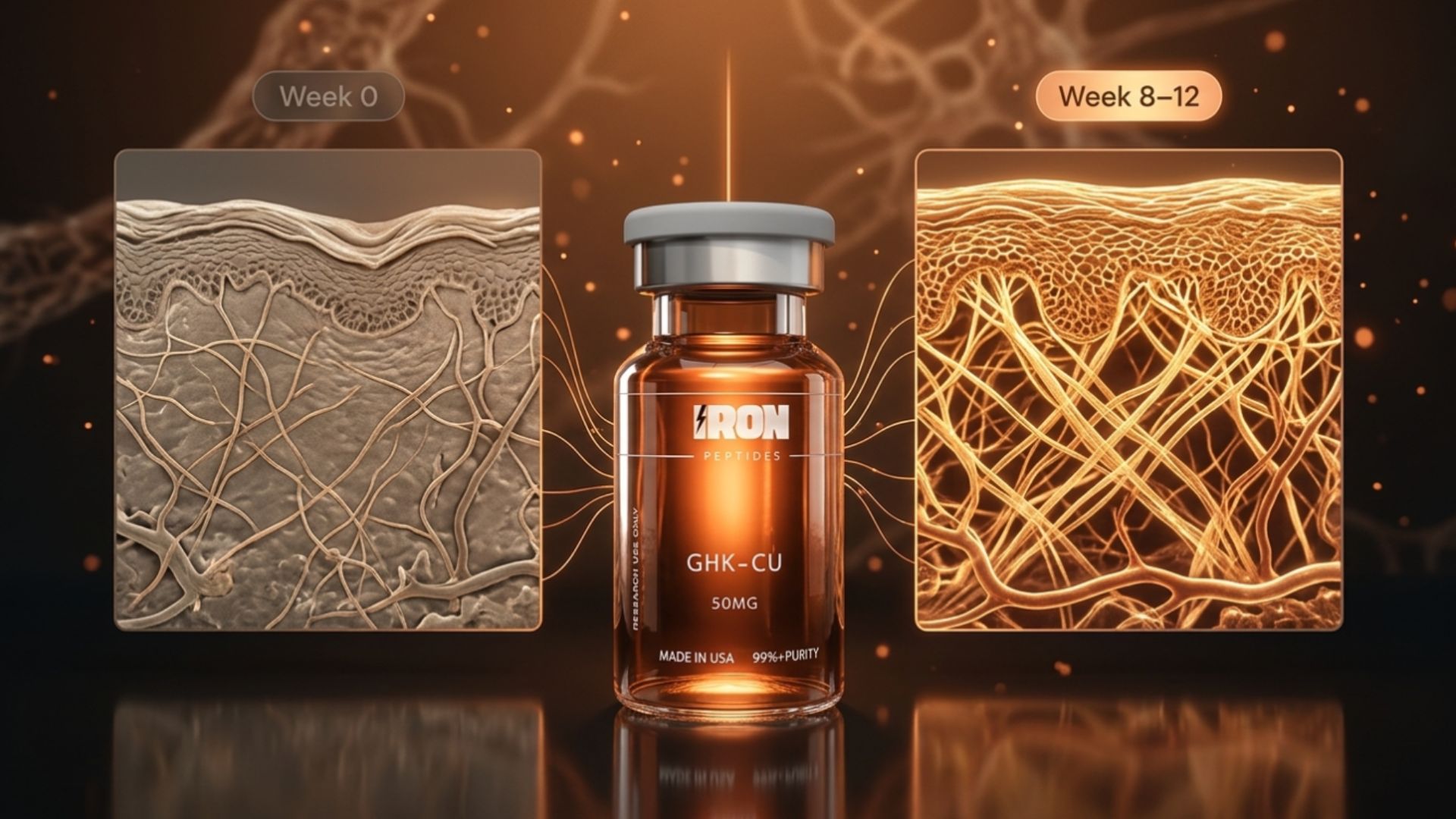
GHK Cu before and after reports across skincare communities, biohacking forums, and clinical observation records follow a consistent timeline.
- Weeks 1-4: subtle. Improved skin hydration and texture are the first commonly reported changes. Some users note faster healing of minor wounds or blemishes during this window.
- Weeks 4-8: more visible. Skin firmness improvements, reduction in fine line appearance, particularly around the eyes and mouth, and improved tone evenness. This is when the effects of collagen synthesis start to accumulate to a level the eye can detect.
- Weeks 8-12: the full picture. Scar fading, measurable improvements in skin thickness for users tracking with pinch tests, and – for hair protocols – initial improvements in shedding rates and early density changes.
GHK-Cu before and after results are strongly dependent on product quality and formulation. A GHK Cu serum that’s improperly formulated – wrong pH, incorrect copper chelation, insufficient concentration – won’t produce the collagen response the research describes. This is where verification matters: COAs, third-party testing, and transparent sourcing are directly relevant to the outcome.
GHK-Cu Side Effects and Safety Considerations
GHK Cu side effects documented in the research are minimal, which reflects both the compound’s natural occurrence in the body and its favorable biological profile.
- Topical: mild skin irritation or temporary redness is the most common report, usually during initial use or with higher-concentration formulations. Resolves quickly in most cases.
- Injectable: injection site sensitivity and occasional transient redness are standard. Copper-sensitive individuals are a small subset who should exercise caution, as copper accumulation at excessive doses is theoretically relevant, though standard research protocols are well within documented safe limits.
The most common source of unexpected reactions in GHK-Cu protocols is product quality, not the peptide itself. Impure or improperly chelated products cause irritation and inconsistent results, which are attributed to the compound. Verified sourcing is the practical mitigation.
GHK-Cu Injection Protocol vs Topical Serums: Which Works Better?
GHK Cu serum and injectable GHK-Cu aren’t competing options – they’re targeting different layers.
Topical application via GHK Cu serum or GHK Cu topical formulations works at the skin surface and dermis – ideal for fine lines, skin texture, tone, and surface-level wound healing. Penetration depth is the limiting factor. What topical GHK-Cu does well, it does consistently and with low complexity.
A GHK-Cu injection protocol delivers the compound systemically – reaching deeper tissue, supporting internal wound healing and organ-level repair, and allowing scalp-specific targeting via mesotherapy injection for hair applications. The genomic activation documented in the Pickart research is most fully expressed through systemic delivery. Typical reference protocols run 1-2mg subcutaneously, 2-3 times per week, in 8-week cycles followed by a 4-week break.
Many advanced users run both simultaneously: a daily topical for surface skin maintenance and weekly injections for systemic anti-aging and deeper tissue targets. GHK-Cu is available as a standalone injectable compound and is also part of both our GLOW blend (paired with BPC-157 and TB-500 for tissue repair and aesthetic regeneration) and our KLOW blend for protocols that need inflammation control alongside regenerative activity.
All formats are batch-tested by Freedom Diagnostics with lot-specific COAs published before purchase.
Final Thoughts: Is GHK-Cu Worth Adding to Your Protocol?
The research case for GHK-Cu is the strongest in the regenerative peptide space. Five decades of published work. Documented activity across 4,000+ genes. Consistent clinical observation of skin, hair, and wound healing improvements. A safety profile that reflects its natural presence in the body.
GHK Cu benefits span collagen synthesis, angiogenesis, hair follicle support, antioxidant gene regulation, and anti-inflammatory activity – through mechanisms that operate simultaneously rather than sequentially. Copper peptide at this level of research depth isn’t a trend. It’s established science that the broader skincare and longevity community is still catching up to.
For skincare-focused goals, start with a quality copper peptide serum and assess response at 8-12 weeks. For systemic anti-aging, wound healing, or hair restoration, a GHK-Cu injection protocol delivers the full genomic expression described in published research. Source carefully, verify the COA, and treat the GHK Cu peptide protocol with the same rigor you’d apply to any research-grade compound.