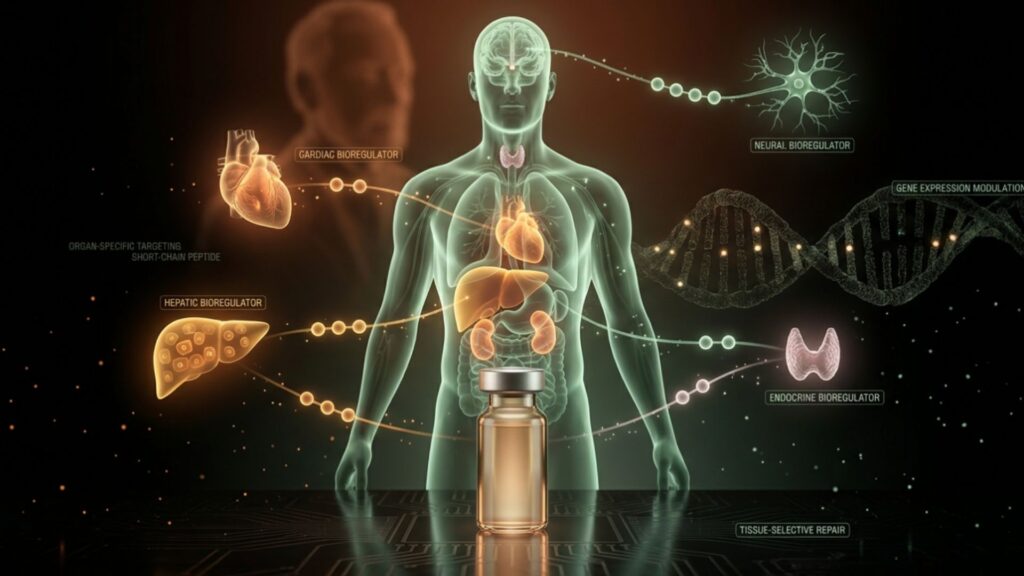

In recent years, interest in the immune system has gone far beyond simply “taking vitamin C when you have a cold.” Increasing attention is being paid to compounds that directly regulate the immune response, and thymic peptides, named after the thymus gland.
The main players in this topic are thymosin alpha-1, thymosin beta-4, and thymulin. Among them, thymosin alpha-1 stands out: it is one of the few research peptides with a real clinical history of use in several countries.
In this article, we will examine how thymic peptides affect the immune system, what research says about them, and the effects and side effects reported.
Important. All peptides mentioned in this text are provided for informational purposes only. The final decision regarding their use must be made by a qualified specialist (a physician or immunologist), taking into account the individual’s health status, medical history, and current medications. Remember that even where a peptide has a clinical track record abroad, in the U.S., and in many other countries, it remains a research-grade compound.
What Is Thymosin Alpha-1 and How Does It Work?
Let’s start with the main question: what is thymosin alpha-1? It is a peptide consisting of 28 amino acids that is normally produced by the thymus – the organ responsible for the “training” and maturation of T-cells, the central players in adaptive immunity.
Thymosin alpha-1 peptide functions not as a simple “booster” of the immune system, but as a modulator. It improves T-cell function and maturation, enhances the body’s ability to recognize and respond to pathogens, supports natural killer (NK) cell activity, and helps balance the immune response.
It is precisely this dual, balancing mechanism that distinguishes thymosin alpha-1 from most “immunostimulants.” It does not simply overstimulate the immune system in all directions, but helps it function more precisely. Abroad, thymosin alpha-1 (under the brand name Zadaxin) has been used clinically as an adjunct treatment for hepatitis B and C. It has also been used in several oncology protocols and as an immune support agent. This significantly distinguishes it from many research peptides, as its evidence base is built primarily on real-world clinical use.
Thymosin Alpha-1 Benefits – What the Research Shows
Thymosin alpha-1 benefits are supported by a more robust research base than that of most peptides in general. Among the described and studied effects, Thymosin alpha-1 has been studied specifically as an adjuvant that enhances the immune response to vaccination in the elderly and immunocompromised patients.
- Enhanced T-cell production and function
- Improved immune response to viral, bacterial, and fungal infections
- Support of immune function in people with immunodeficiency conditions
- Modulation of excessive inflammatory responses
- Potential supportive role in oncology protocols through improved immune “surveillance.”
Thymosin alpha-1 peptide benefits are also of interest in the context of chronic conditions involving immune dysregulation – chronic infections, certain autoimmune processes (where the regulatory, rather than stimulatory, function is crucial), as well as age-related decline in thymus function (immunosenescence), since the thymus naturally loses activity with age.
At the same time, it is important to be honest in our statements: thymosin alpha-1 has real clinical support for specific medical applications, whereas its use “for general immune support” in healthy people is more of a logical assumption based on its mechanism of action than a proven fact. Self-medication can cause even more health problems, so it is essential to consult a specialist before using anything.
Thymosin Alpha-1 Dosage When Sick vs Maintenance
One of the most common practical questions concerns how treatment approaches vary depending on the situation (during maintenance and during the active phase of illness). Thymosin alpha-1 dosage for maintenance use is typically described as a more “mild” regimen – less frequent and in smaller doses, designed for long-term, regular support of immune function.
Thymosin alpha-1 dosage when sick, as described, differs: during the active phase of illness, protocols become more intensive, with increased frequency in the acute phase, followed by a gradual return to the maintenance regimen as recovery progresses. The logic here is clear: the modulating effect on the immune system is most valuable precisely when it is actively “working.”
An important caveat is worth noting here: in the event of severe or worsening symptoms, one should seek medical care rather than rely on any peptide protocols. Thymosin alpha-1 can support immune function, but it does not replace treatment for serious infections.
Thymosin Alpha-1 Dosage and Administration Guide
Speaking generally about thymosin alpha-1 dosage and approaches to use, several regimens are typically distinguished in research and clinical contexts:
- Maintenance: for general long-term immune support
- More intensive: modeled after clinical protocols for prolonged therapeutic support
- Short-term, intensive: for periods of acute immune “challenge”
The peptide is supplied in lyophilized form and requires reconstitution before use, followed by storage in the refrigerator. It is administered subcutaneously, with rotation of injection sites to reduce local irritation (only under specialist supervision!).
The duration of use also varies depending on the goal: short courses for the duration of the illness (from a few days to a couple of weeks) or longer protocols to support immunity over several months, usually with breaks.
The effect is not immediate. Thymosin alpha-1 peptide modulates immune cell function gradually, over days to weeks. Consistency plays a much greater role here than a single dose.
For those considering buying thymosin alpha-1 as the next step, the key factor is not the purchase itself, but the question of origin and quality – how transparent the supplier is and whether a third party has verified the purity of the composition.
Thymosin Beta-4, Thymulin, and Related Immune Peptides
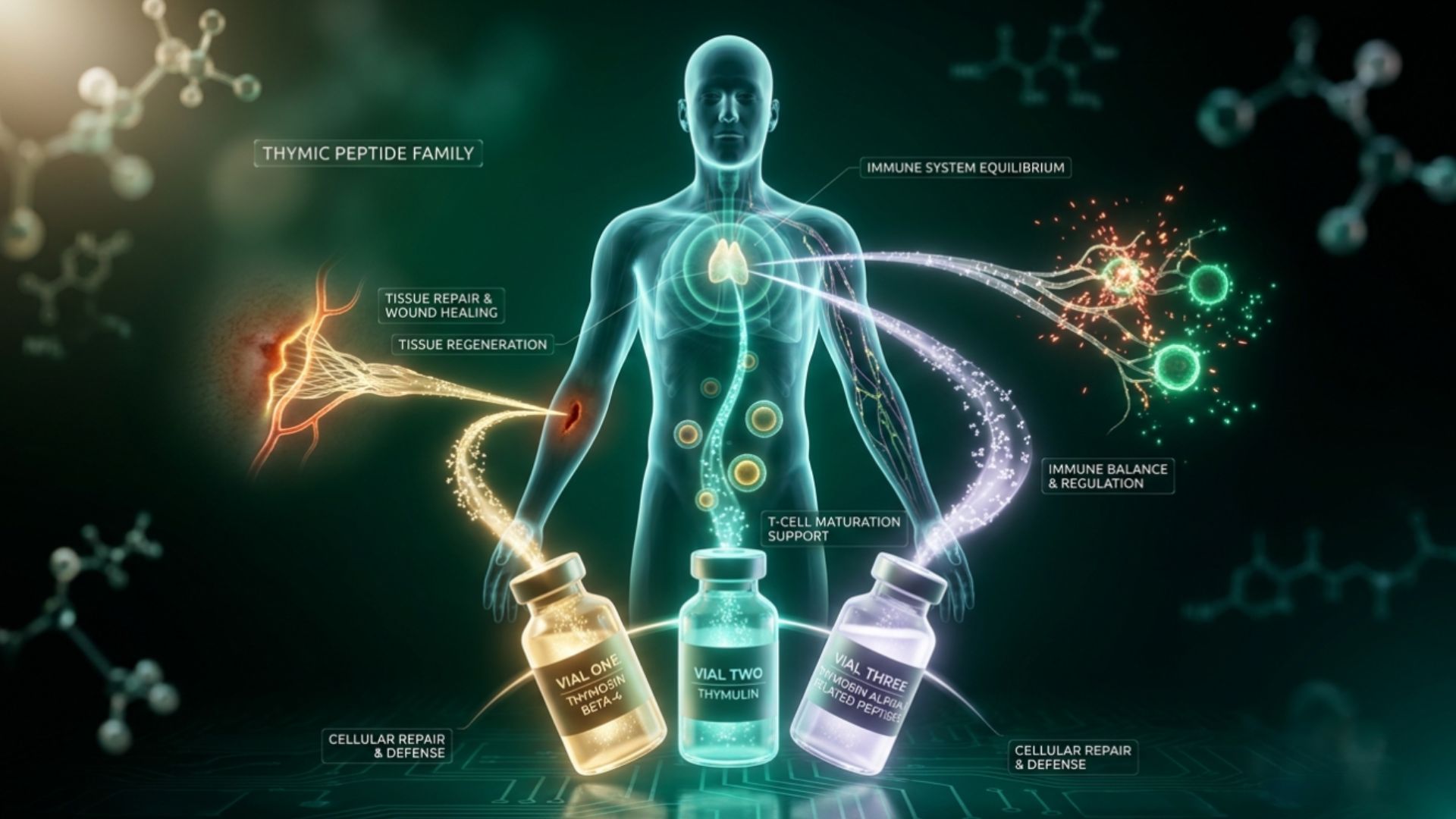
Thymosin alpha-1 is not the only peptide in this family, and it is worth understanding how its “relatives” differ:
- Thymosin beta-4 is the peptide from which TB-500 is derived, and it is primarily known in the context of tissue repair, healing, and regeneration. That said, it also has immune-related effects (modulation of inflammation and support for cellular repair), but overall, it is more closely associated with tissue repair.
- Thymulin is another thymic peptide with immunomodulatory properties. Thymulin peptide influences T-cell function and requires zinc as a cofactor for its biological activity, which is why zinc status in the body is directly linked to how natural thymulin functions. Thymulin has been studied for its roles in immune regulation, anti-inflammatory effects, and even pain modulation.
Together, these three peptides form a unique “family” of immune-modulating compounds:
- Thymosin alpha-1: for modulating immunity and the response to infections
- Thymosin beta-4: for recovery with immune-related effects
- Thymulin: for regulating T-cell function.
When it comes specifically to targeted immune support, thymosin alpha-1 has the strongest evidence base and clinical history. The other two, however, address related or independent goals.
Thymosin Alpha-1 Side Effects and Safety Profile
According to reports, thymosin alpha-1 side effects are generally mild and infrequent, which is partly why this peptide has established a solid clinical reputation. Among the most commonly reported:
- Reactions at the injection site (redness, mild discomfort, temporary swelling)
- Occasional fatigue
- Mild “flu-like” symptoms associated with immune system activation
- Headache (in fairly rare cases)
Since thymosin alpha-1 modulates, rather than unconditionally stimulates, the immune system, it is generally well tolerated, even in immunocompromised populations in which clinical trials have been conducted.
Several groups deserve special attention, for whom this topic requires particular caution:
- People with autoimmune conditions should approach this with caution and under medical supervision, as immune modulation could theoretically influence the course of the autoimmune process in either direction.
- People undergoing immunosuppressive therapy (for example, after organ transplantation or as part of treatment for certain autoimmune diseases) should not use immunomodulatory peptides without medical supervision, as this may interfere with necessary immunosuppression.
- Pregnancy and lactation are also areas where data are insufficient, and use should be avoided.
How to Buy Thymosin Alpha-1 and Verify Quality
When it comes to buying thymosin alpha-1, the main question is not “where is it cheaper” but “how to verify quality” in the unregulated market for research peptides. In the U.S., thymosin alpha-1 is sold as a research-grade compound not approved for general consumer use, although in several other countries it has prescription or clinical status.
What to look for when assessing quality:
- The presence of third-party certificates of analysis confirming the peptide’s identity, purity (typically 98%+), and concentration
- Specification of a specific testing laboratory, rather than vague wording like “tested by an independent laboratory”
- Compliance with the cold chain during delivery and storage conditions
- Transparency regarding content in mg and batch numbers
- Correct labeling as “for research purposes,” rather than being disguised as a dietary supplement or medication.
You should be wary of suspiciously low prices (the production of thymosin alpha-1 is objectively not cheap), as well as suppliers without published certificates of analysis and those who make explicit medical claims. An alternative available in some countries is to obtain thymosin alpha-1 from a compounding pharmacy with a prescription, which provides an additional level of quality control and medical supervision. In any case, the key priority is verifiable quality, not price.
Is Thymosin Alpha-1 Right for You? Practical Takeaways
To summarize: thymosin alpha-1 is most often relevant for people who get sick frequently or notice reduced immune resilience, for older adults whose natural thymus activity is declining, and for those going through periods of increased stress or risk of infection.
On the other hand, this topic requires caution or is not suitable at all for healthy people without specific immune issues (where the benefits remain largely theoretical), people with autoimmune diseases without medical supervision, people undergoing immunosuppressive therapy without specialist monitoring, as well as pregnant and breastfeeding women.
Thymosin alpha-1 dosage when sick and maintenance protocols are different regimens designed for different purposes; consistent results are built on regularity, not on one-time use. Among immune peptides, thymosin alpha-1 benefits and its clinical history make it the most studied in its category, but it works effectively only with a sensible approach and realistic expectations.
Important. The information in this article is provided solely for educational purposes and does not constitute medical advice or a recommendation for use. The decision to use any peptides, including thymosin alpha-1, thymosin beta-4, and thymulin, as well as the selection of an appropriate protocol, should be made by a qualified specialist, taking into account the individual’s health status, medical history, and current medications.