If you’re reading this article, chances are you’ve already gone through the typical journey: first, you panicked when you saw hair on your pillow. Then you started Googling, stumbled upon minoxidil, finasteride, expensive hair transplants, or dozens of serums with flashy words like “revolution” and “breakthrough” on the packaging.
And then, amidst all this noise, something new suddenly pops up – peptides for hair loss. And after so many attempts to find something truly worthwhile, peptides sound like just another marketing gimmick, don’t they?
But in the case of GHK-Cu and copper peptides, things are a little different: there is actual research behind them. Not reviews like “it worked for me, you should try it,” but real lab data on how these compounds affect follicle cells.
But let’s take it one step at a time:
- How do copper peptides work at the follicle level?
- What exactly do studies on GHK-Cu show?
- What’s the difference between topical application and injections?
- What timeframes are realistic?
- What should you look for when choosing a product?
- How does all this work with the products you’re already used to?
But you must understand that peptides for hair growth are a tool for solving the problem, BUT only with the right approach and under the guidance of a specialist.
How Copper Peptides for Hair Actually Work
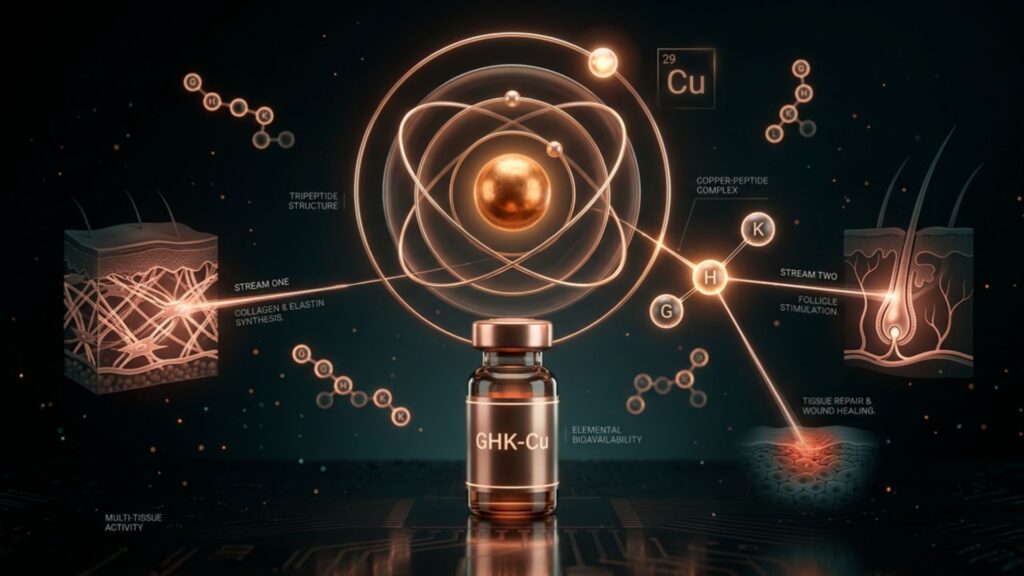
Copper peptides for hair affect the follicle in several ways at once. GHK-Cu (copper tripeptide-1) is a natural compound that binds copper and participates in tissue repair throughout the body. Here’s what happens at the follicle level:
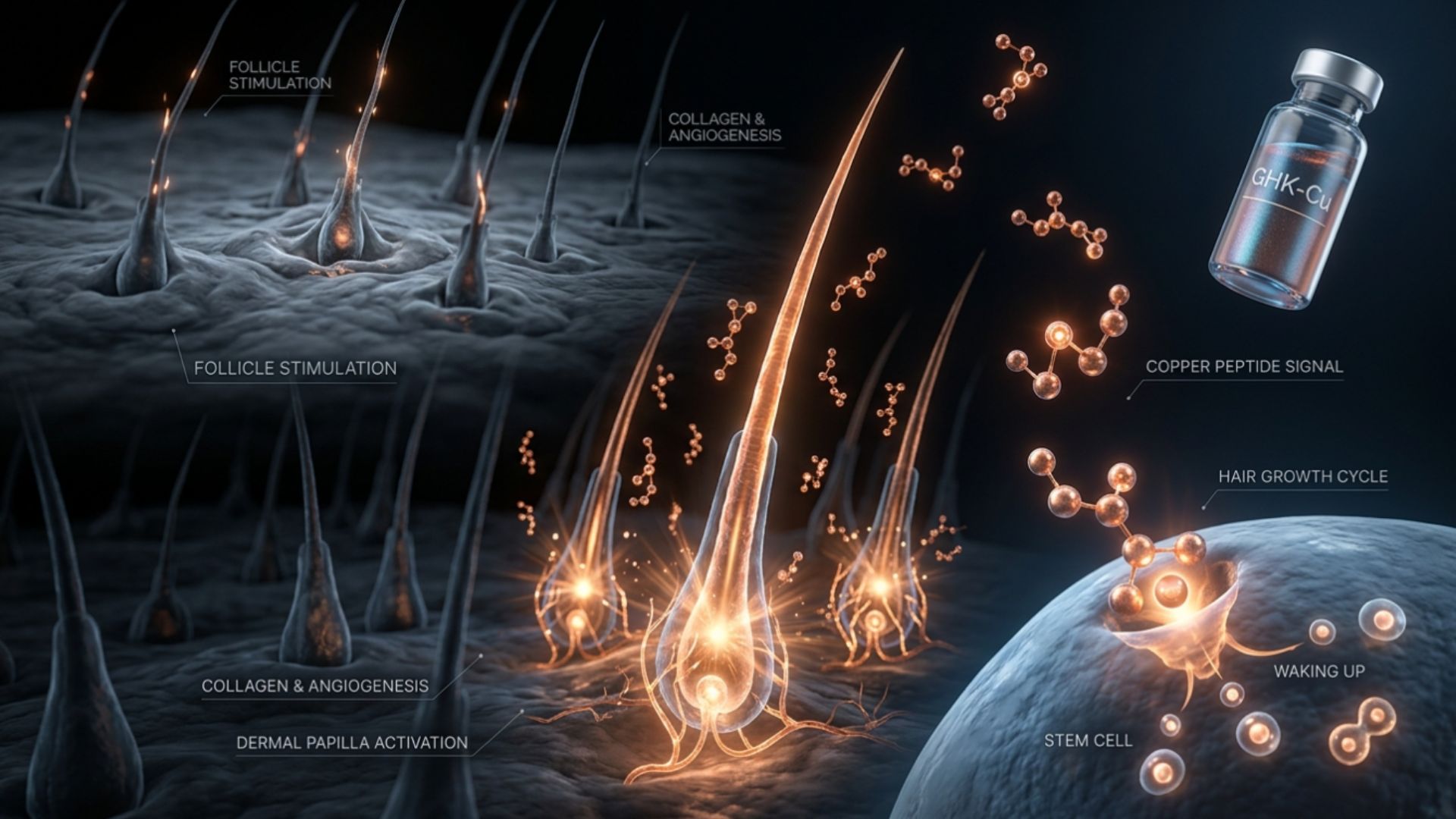
- Stimulates dermal papilla cells. This is a sort of “command center” at the base of the follicle that determines whether the hair will grow, rest, or fall out.
- Improves blood supply through angiogenesis – the formation of new blood vessels – meaning more oxygen and nutrients reach the scalp.
- Extends the active growth phase (anagen) and slows the transition to the resting and shedding phases.
- Slightly reduces the activity of 5-alpha-reductase, the enzyme that converts testosterone into DHT, the main culprit behind androgenic hair loss.
It is especially important to understand the last point correctly: there is an effect here, but it is mild. This is not a substitute for specialized DHT blockers, but rather a slight bonus in the overall picture.
To sum it all up, the point isn’t that the peptide “pumps up” existing hair with growth steroids. It creates a more favorable environment for the follicle: better blood flow, a longer growth phase, and slightly less hormonal stress. It’s a slow process of improving conditions, as a result of which you’ll forget about hair loss.
What the Studies Show About GHK-Cu for Hair Loss
GHK-Cu for hair loss has indeed been studied more than most peptides that come up in similar searches. This doesn’t mean the evidence base is on par with minoxidil; it’s simply been studied more extensively.
What the studies show:
- Stimulation of dermal papilla cell proliferation in laboratory conditions.
- Increased follicle size in research models.
- Increased expression of growth factors important for the hair cycle.
- In some preliminary studies, results comparable to minoxidil for follicle activation were obtained.
It’s worth mentioning the GHK-Cu peptide for hair in the context of healing. The fact is that a scalp in good condition simply “nourishes” the follicles better. Of course, this isn’t the main focus of peptides, but it’s worth mentioning.
The most compelling data have been obtained from cell cultures and animal studies, rather than from large clinical trials involving humans. This is normal for peptides at this stage. BUT this means that claims like “guaranteed hair growth” still lack a scientific basis (in humans), especially in cases of severe hair loss. However, for early-stage thinning, the picture looks really promising – the data trend is consistently positive.
GHK-Cu Hair Growth Before and After – Realistic Expectations
What actually happens when a person starts using GHK-Cu, and how long does it take? It’s important to note right away: expect a minimum of 8-12 weeks, and even then, these will only be the first signs of results (not the dramatically thick hair shown in ads).
A realistic timeline for GHK-Cu hair growth before and after looks something like this:
- Weeks 1-4. The most noticeable changes are reduced hair loss and improved scalp condition. There is likely no visible new hair growth yet.
- Weeks 8-12. The first fine new hairs appear, and existing hair may seem slightly thicker.
- Months 4-6. This is the window where those who respond to the therapy see the most noticeable changes: density, thickness, and filling in of thinning areas.
The main rule is simple: the best results are seen in those at an early stage of thinning (very mild hair loss), where the follicles are dormant but still alive. For people with severe baldness, where the follicles have already died, peptides will not help. In such cases, the treating physician must provide recommendations.
If you decide to photograph your progress, do so consistently: same lighting, same angle, dry hair. Otherwise, the difference will be in the light, not in the hair.
Topical vs. Injectable – How to Use Copper Peptides for Hair Growth
Copper peptides for hair growth can be used in two ways, each addressing different needs.
Topical application (serums, tonics, scalp sprays):
- The most affordable and easiest-to-use option
- GHK-Cu copper peptide hair tonic delivers the peptide directly where it’s needed
- Minimal systemic impact (works locally)
- Often combined with microneedling (derma roller) to improve penetration through the skin barrier – many cite this combination as a game-changer in results
Injectable application (subcutaneous injections, mesotherapy):
- Delivers higher concentrations directly to the follicle area
- Potentially more pronounced effect
- Requires skill, accompanied by discomfort
- Typically performed in a clinic
For most people, the best place to start is by purchasing a high-quality topical tonic. With regular use, the first results will be noticeable in 8-12 weeks. And yes, concentration matters: if the label says “with GHK-Cu” but there are no numbers listed – it likely contains very little of it, just enough to lure you in with the name.
Best Peptides for Hair Growth Beyond GHK-Cu
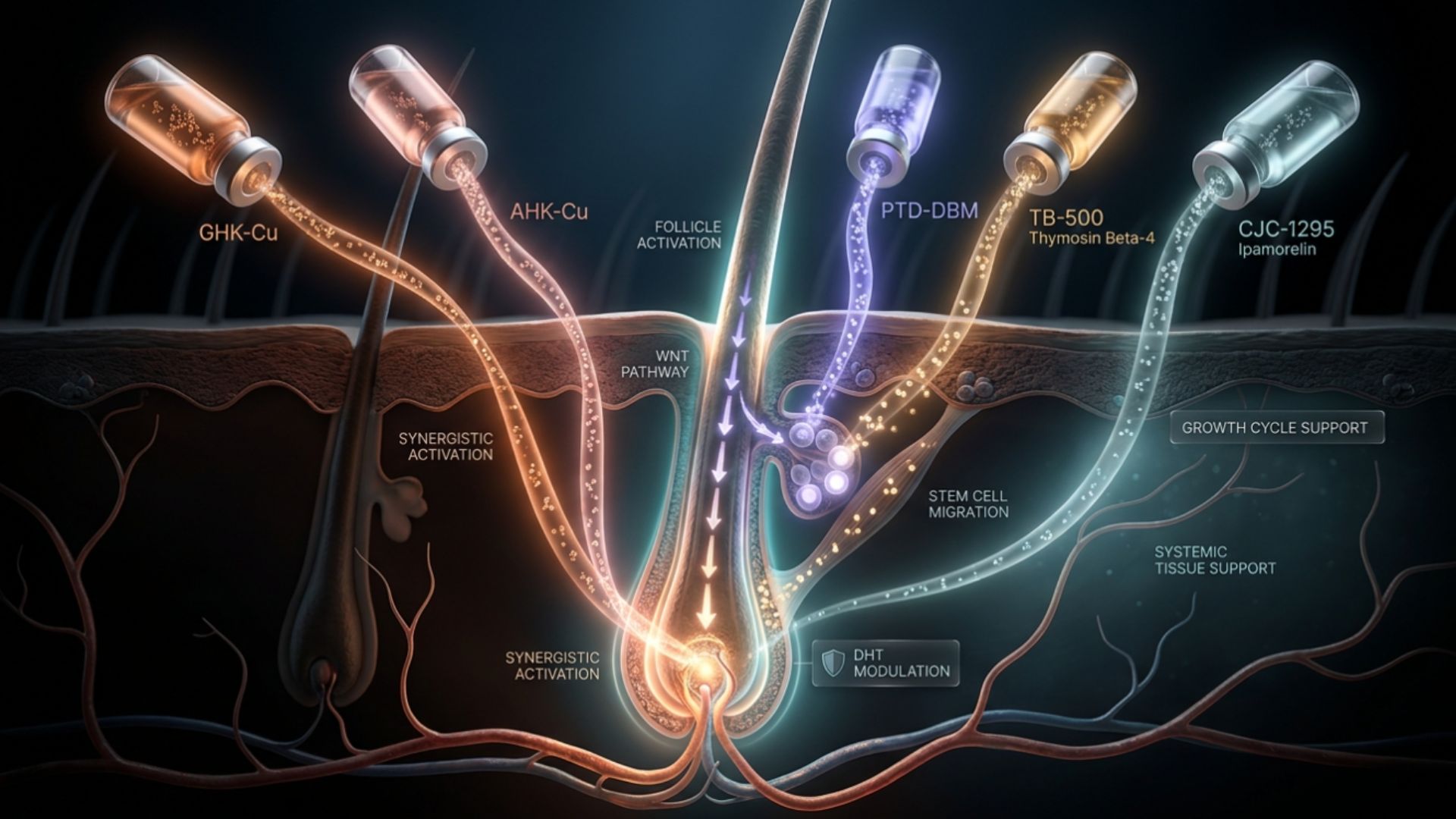
GHK-Cu is the star of the show, but it’s not the only option among hair growth peptides. Best peptides for hair growth often work as a team:
- AHK-Cu. This is another copper peptide, often paired with GHK-Cu in commercial products for synergistic follicle stimulation.
- PTD-DBM. It acts on the Wnt signaling pathway, which is directly linked to the activation of dormant follicles.
- Thymosin beta-4 (TB-500). It influences the migration of follicular stem cells, which is important for regeneration.
- CJC-1295 / ipamorelin. Systemic growth hormone peptides are not specific to hair, but improvements in overall tissue health often translate to better hair quality.
The idea behind hair loss peptides is that they work best as a multifaceted approach – stimulating the follicle, improving blood supply, and extending the growth cycle. A single component cannot cover all of this at once, which is precisely why combinations are so common.
How Peptides Fit Alongside Minoxidil and Finasteride
A common misconception arises here: “either peptides or minoxidil with finasteride.” In reality, they are not competitors, but rather a team with different roles.
Minoxidil increases blood flow and prolongs the growth phase through its own mechanism (separate from how copper peptides work). Many people use both, simply spacing them out over time.
Finasteride targets the hormonal cause – DHT. This is precisely what hair growth peptides have only a limited effect on. For genetic male pattern baldness, this is often the decisive factor.
For severe hair loss, the most effective combination usually includes all three approaches at once. For mild thinning, copper peptides alone may be sufficient. It all depends on the specific condition you’re treating. Qualified specialists should determine the appropriate dose and concentration; be sure to consult them for help.
Choosing the Best Copper Peptides for Hair Growth – What to Look For
The market for copper peptides is huge right now, and it mostly consists of pretty little jars with questionable contents. To get results – and not additional problems – pay attention to the following:
- Concentration. Effective products usually contain 1-3% copper peptides. If no number is listed, there are likely no peptides in there.
- Formula composition. Copper peptides are sensitive to vitamin C, strong acids, and retinol. If all of these are mixed in a single bottle, the peptide is likely already deactivated by the time you apply it (an active peptide is a pure peptide).
- Packaging. Airless vials protect the peptide from light and air. A clear jar sitting on a shelf by the window is a bad sign.
- Brand transparency. Look for clear information on concentration, source, and composition.
For injectable GHK-Cu, third-party certificates of analysis (COA) are a mandatory requirement that confirms the purity of the formulation. At Iron Peptides, every product undergoes independent verification so our customers can be confident in the quality of what they are purchasing.
High-quality best copper peptides for hair growth clearly state their concentration, come from a verified source, and work well with microneedling. But promises to “cure baldness in a month” and suspiciously low prices are a reason to close the tab.
Are Peptides Worth It for Your Hair Loss? Practical Takeaways
Let’s sum it up as honestly as possible.
Who it’s suitable for:
- Early and moderate thinning, where follicles are weakened but still alive
- Those who want to supplement their existing routine with minoxidil or finasteride
- Those who are ready for regular use for at least 4-6 months
Who is unlikely to benefit:
- Severe baldness with dead follicles
- Those expecting results in a couple of weeks
- Those who aren’t ready to stick to the regimen
Peptides for hair growth are a real tool backed by real science. It’s not a miracle, but an honest, evidence-based addition to an approach that already works – and one of the most exciting developments in this field in recent years.
This article is for educational purposes only and does not constitute medical advice. Before starting any hair loss treatment, consult a qualified trichologist.